

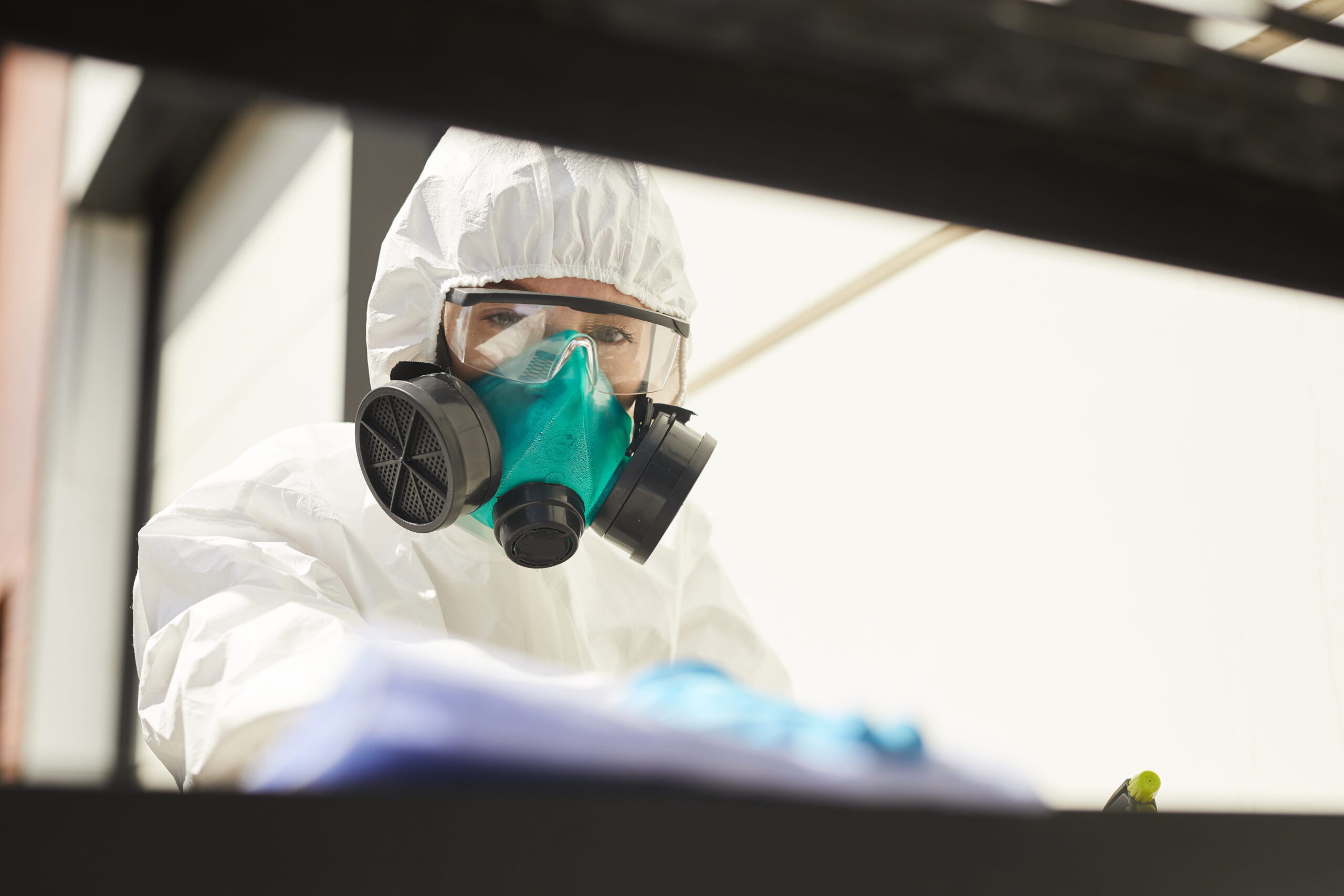
Not all asbestos removal work is classified in the same way. Depending on the type of asbestos material, its condition and the likelihood of fibre release, the work may be classed as either licensed or non-licensed.
Understanding the difference is important, as it helps ensure asbestos is managed safely and in accordance with current regulations.
What Is Licensed Asbestos Removal?
Licensed asbestos removal refers to higher-risk work involving asbestos-containing materials that have a greater potential to release harmful fibres when disturbed.
Because of the risks involved, this type of work must be carried out by a contractor licensed by the Health and Safety Executive (HSE).
Licensed asbestos removal is subject to strict regulations and control measures designed to protect workers, building occupants and the surrounding environment. Depending on the nature of the work, this may include the use of specialist enclosures, controlled removal techniques, air monitoring and waste disposal procedures.
Materials that commonly require licensed removal include pipe lagging, loose fill insulation and certain types of asbestos insulation board (AIB), particularly where the material is damaged or likely to release fibres during removal.
Before any removal work takes place, a suitable assessment should be carried out to determine the level of risk and whether a licensed contractor is required.
What Is Non-Licensed Asbestos Removal?
Non-licensed asbestos removal generally involves lower-risk asbestos-containing materials that are in good condition and unlikely to release significant amounts of fibres when handled correctly. Unlike licensed asbestos work, these activities do not require a contractor to hold an HSE asbestos licence.
Examples of materials that may fall into this category include asbestos cement sheets, roof panels, gutters, downpipes and certain floor tiles. These materials are typically more tightly bound, reducing the likelihood of fibre release during removal.
However, non-licensed does not mean risk-free. Asbestos fibres can still be released if materials are damaged, broken or handled incorrectly.
Appropriate control measures, training and safe working practices are still required to minimise the risk of exposure and ensure compliance with current regulations.
The classification of asbestos work will always depend on the specific material, its condition and the nature of the work being carried out. In some cases, a professional assessment may be needed to determine the most appropriate removal method.
What Determines Whether Work Is Licensed or Non-Licensed?
The classification of asbestos work is not based on a single factor. Instead, several considerations are taken into account to determine the level of risk involved and whether the work requires a licensed asbestos contractor.
Type of Asbestos Material
The type of asbestos-containing material plays an important role in determining how the work is classified. Some materials are more friable than others, meaning they can release fibres more easily when disturbed.
Materials such as pipe lagging and loose fill insulation are generally considered higher risk, while bonded products such as asbestos cement are often lower risk.
Condition of the Material
The condition of the asbestos-containing material is also assessed. Materials that are damaged, deteriorating or showing signs of wear may be more likely to release fibres than those that remain intact and in good condition.
Likelihood of Fibre Release
One of the key considerations is the potential for asbestos fibres to become airborne during the work.
Activities that are likely to generate dust or disturb asbestos-containing materials to a greater extent may require additional control measures and, in some cases, licensed removal.
Nature of the Work
The type of work being carried out can also influence how it is classified. Maintenance, repair, encapsulation and removal activities may all present different levels of risk depending on the material involved and the extent of the work required.
Before asbestos work takes place, a suitable assessment should be carried out to determine the most appropriate approach. This helps ensure the correct procedures, control measures and level of expertise are applied to the work being undertaken.
What Is Notifiable Non-Licensed Work (NNLW)?
Notifiable Non-Licensed Work (NNLW) is a category of asbestos work that sits between licensed and non-licensed asbestos removal. Although the work does not require a licensed asbestos contractor, it involves a higher level of risk than standard non-licensed work.
Certain activities involving asbestos-containing materials may fall into this category where there is a greater potential for fibre release, such as work involving damaged materials or tasks that are likely to cause significant disturbance.
NNLW must be notified to the relevant enforcing authority before work begins and is subject to additional requirements, including specific training, medical surveillance and record-keeping procedures.
Determining whether work falls into the NNLW category can sometimes be complex, which is why an asbestos management survey or an asbestos refurbishment & demolition survey should always be carried out before asbestos work takes place.
Why Is the Correct Classification Important?
Correctly classifying asbestos work helps ensure that asbestos-containing materials are managed safely and in accordance with current regulations. Different types of asbestos work carry different levels of risk, and the control measures required will vary depending on the nature of the task.
By identifying whether work is licensed, non-licensed or notifiable non-licensed, it becomes easier to select the most appropriate removal method and ensure the necessary precautions are in place. This helps protect workers, building occupants and anyone else who may be affected by the work.
Correct classification is also important for regulatory compliance. Using the appropriate procedures, training requirements and control measures helps ensure asbestos work is carried out safely and reduces the risk of avoidable exposure.
Ultimately, understanding the correct classification allows asbestos work to be planned and managed effectively, ensuring the right level of expertise is applied to the task and that unnecessary risks are avoided.
Can You Remove Asbestos Yourself?
Some lower-risk asbestos-containing materials may not legally require a licensed asbestos contractor for removal. However, this does not mean the work can be carried out without proper precautions.
Asbestos removal should always be approached with caution, as disturbing asbestos-containing materials can release fibres into the air. The level of risk will depend on the type of material, its condition and the nature of the work being carried out.
Before undertaking any asbestos work, it is important to understand the risks involved and ensure the correct procedures are followed. Professional advice from experts such as our team at Malrod can help determine the most appropriate course of action and whether specialist asbestos services are required.
Why Choose Malrod?
Choosing the right asbestos contractor is essential when managing asbestos risks and ensuring work is carried out safely.
At Malrod, we’ve been providing professional asbestos services since 1975, supporting clients across a wide range of domestic, commercial and industrial projects.
Here’s why clients across the UK choose Malrod:
- Nearly 50 years of experience in asbestos management and removal
- Licensed asbestos removal specialists
- Qualified asbestos professionals with extensive industry knowledge
- Nationwide coverage for domestic, commercial and industrial properties
- Family-run business built on professionalism, reliability and customer service
- Support with asbestos surveys, risk assessments and removal projects
Need Advice on Asbestos Removal for Your Home or Business?
If you’re unsure whether asbestos work is classed as licensed or non-licensed, our team can help.
We provide asbestos surveys, risk assessments and asbestos removal services across the UK, helping property owners and duty holders make informed decisions and manage asbestos safely.
To discuss your requirements, call us today on 01942 811591 or complete our contact form and a member of our team will be in touch.
Frequently Asked Questions
What is the difference between licensed and non-licensed asbestos removal?
Licensed asbestos removal involves higher-risk asbestos-containing materials that have a greater potential to release fibres when disturbed. Non-licensed asbestos removal generally involves lower-risk materials that are less likely to release fibres when handled correctly.
Does asbestos cement require licensed removal?
Not necessarily. Asbestos cement is often classified as a lower-risk material and may not require licensed removal. However, the classification will depend on factors such as the condition of the material and the nature of the work being carried out.
What is notifiable non-licensed work (NNLW)?
Notifiable Non-Licensed Work (NNLW) is a category of asbestos work that falls between licensed and non-licensed removal. Although a licence is not required, the work must be notified and is subject to additional requirements such as record keeping and medical surveillance.
Can I remove asbestos myself?
Some lower-risk asbestos materials may not legally require a licensed contractor. However, asbestos removal should always be approached with caution, and professional advice is recommended before any work takes place.
Who decides whether asbestos work is licensed?
The classification is determined by factors such as the type of asbestos-containing material, its condition, the likelihood of fibre release and the nature of the work being undertaken. A suitable assessment should be carried out before work begins.
When is an asbestos removal licence required?
An asbestos removal licence is required for certain higher-risk asbestos work involving materials that have a greater potential to release fibres. Examples may include pipe lagging, loose fill insulation and some work involving asbestos insulation board (AIB).