

Read more
Asbestos Removal Plan of Work: What Should It Include?
September 30th, 2026
Before asbestos removal begins, there needs to be a written plan for how the work will be carried out safely. […]
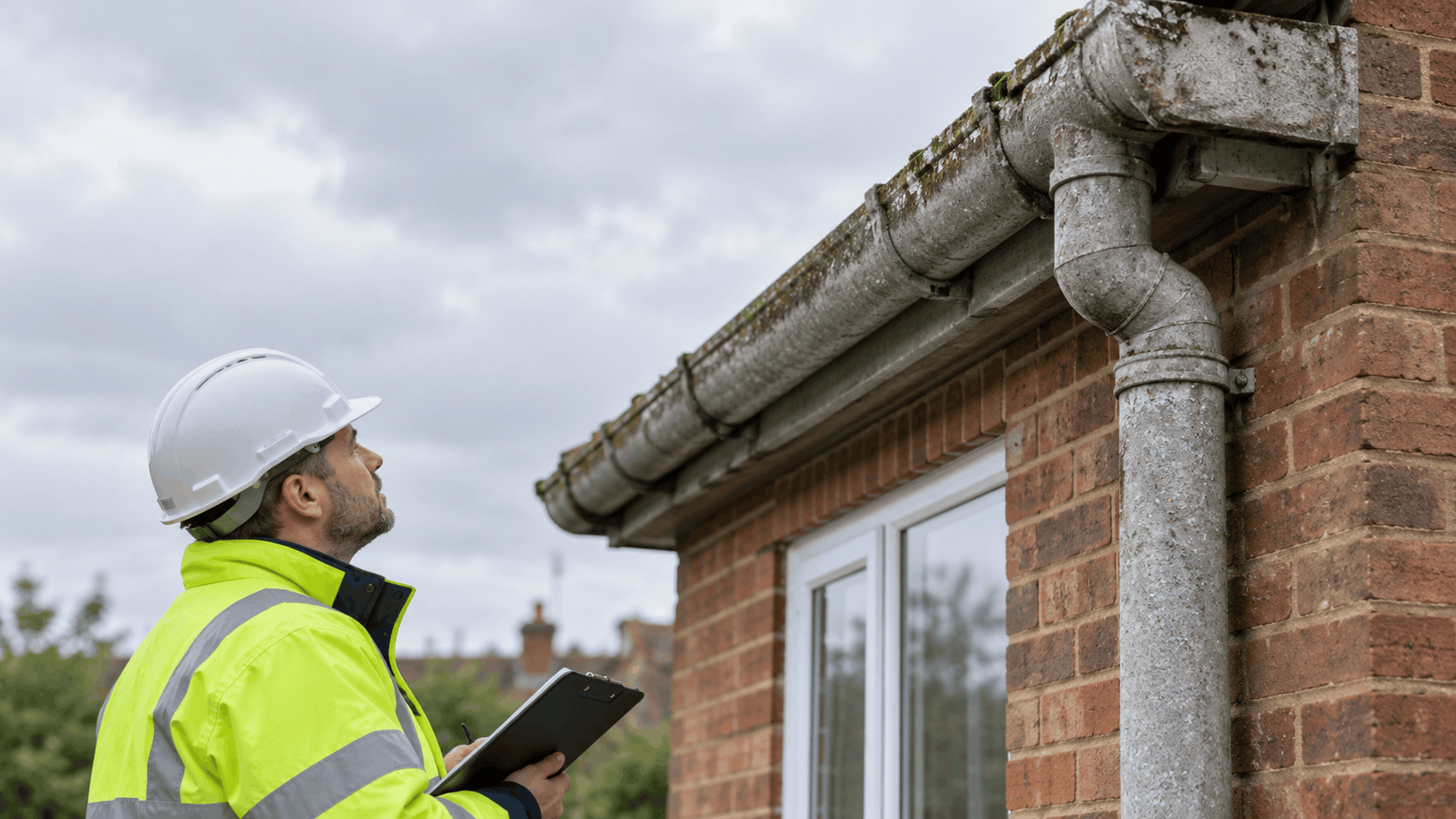
Noticed some old guttering or downpipes on your property that are starting to deteriorate or need replacing? If your building is older, there’s a possibility they could contain asbestos, as asbestos cement was once commonly used to manufacture rainwater goods.
In this guide, we’ll explain how to identify possible asbestos guttering and downpipes, the risks they may present and what your options are if they’re damaged or need replacing.
Asbestos guttering is made from asbestos cement, a material that combines cement with asbestos fibres to improve its strength and durability.
It was commonly used for rainwater systems because it was strong, resistant to corrosion and able to withstand prolonged exposure to the weather. Both gutters and downpipes were manufactured using asbestos cement before alternatives such as plastic became more widely used.
Asbestos cement guttering and downpipes are most commonly associated with older properties, particularly those built or refurbished before 2000. Asbestos was fully banned in the UK in 1999, but many older rainwater systems remained in place after this date.
You may find asbestos guttering and downpipes on:
It’s also worth remembering that not every part of a property’s rainwater system will necessarily be made from the same material.
For example, the original guttering may have been replaced with modern plastic gutters while an older asbestos cement downpipe was left in place. Similarly, some sections may have been repaired or replaced over time without the entire system being updated.
If you suspect your property’s guttering contains asbestos, its age, appearance and construction may provide some useful clues.
However, asbestos cement cannot be reliably identified by appearance alone, so these characteristics should only be used as an initial indication.
Older asbestos cement guttering often has several recognisable features:
Asbestos cement guttering can also appear thicker and more substantial than modern plastic alternatives.
Asbestos cement downpipes have a similar appearance to asbestos guttering, although their shape and construction can make them easier to confuse with other traditional rainwater pipes.
They are typically rigid, cylindrical pipes with a hard, cement-like surface. Many have a grey finish, although some may have been painted to match the exterior of the building.
Other characteristics to look out for include:
No. Although asbestos cement guttering and downpipes can have a distinctive appearance, other materials may look very similar. Additionally, painted surfaces can make identification particularly difficult, as they may conceal the original colour and texture of the material.
The age of the property can provide some context, but it isn’t definitive either. An older building may have had its rainwater system replaced, while individual original sections could still remain.
If you’re unsure whether your guttering or downpipes contain asbestos, start by checking whether any existing information about the property identifies the materials used.
For example, an asbestos register, previous maintenance records or documentation from earlier building work may provide useful information.
Where reliable records aren’t available, a professional asbestos assessment can help establish whether asbestos is likely to be present. If necessary, a suitably trained professional can collect a sample for analysis by an accredited laboratory.
Because guttering and downpipes are often positioned at roof level, you shouldn’t attempt to access or sample suspected asbestos materials yourself.
Malrod provides professional asbestos surveys to help identify asbestos-containing materials and determine whether any further action is required.
Asbestos guttering doesn’t automatically pose a significant risk simply because it contains asbestos.
In asbestos cement, the fibres are bound within a solid cement material. This means guttering and downpipes that are in good condition and left undisturbed generally present a low risk of airborne fibre exposure.
The main concern arises when the material is damaged or disturbed. Cutting, drilling, breaking or otherwise damaging asbestos cement can release fibres into the air, which can cause serious asbestos-related diseases if inhaled.
The condition of the guttering and the likelihood of it being disturbed are therefore important factors when assessing the risk.
A leaking gutter doesn’t necessarily mean the asbestos cement itself is damaged. Water may be escaping because of a blocked outlet, a leaking joint or a problem with how the guttering is positioned.
However, if the guttering or downpipe is visibly cracked, broken or deteriorating, it should be assessed before any repairs are attempted.
If you suspect your guttering contains asbestos:
If the material is damaged or you’re unsure of its condition, a competent asbestos professional can assess the situation and advise whether repair, continued management or removal is appropriate.
Yes. If asbestos cement guttering or downpipes are in good condition, functioning properly and unlikely to be disturbed, leaving them in place may be appropriate.
However, their condition should be monitored, and anyone carrying out maintenance or building work around them should be made aware that they contain, or may contain, asbestos.
It’s also worth considering whether the rainwater system is likely to need work in the near future. For example, replacing roof coverings, fascias or soffits may involve working directly around existing guttering.
If you’re planning this type of work, having the guttering assessed beforehand can help establish whether it can remain in place or whether removal and replacement should be included in the project.
Removing asbestos cement guttering and downpipes requires careful planning, particularly because the work usually takes place at height and involves handling long, rigid sections of material.
Before work begins, a competent contractor should assess the condition of the rainwater system, how it is fixed to the building and what access arrangements will be needed.
Where possible, asbestos cement gutters and downpipes should be removed intact to minimise the risk of fibre release. This means considering how individual sections can be safely detached, lowered and handled without unnecessary breakage.
Suitable access equipment and precautions are also needed to protect workers and others nearby.
Once removed, the asbestos cement components must be appropriately packaged, transported and disposed of as asbestos waste in accordance with the relevant requirements.
The property owner can then arrange for replacement guttering and downpipes to be installed, usually using modern materials such as uPVC or aluminium. It’s worth coordinating the removal and replacement work to avoid leaving the property without a functioning rainwater system for longer than necessary.
The Health and Safety Executive provides specific guidance on removing asbestos cement gutters, including the precautions needed to minimise exposure during the work.
Malrod provides professional asbestos removal services, including domestic asbestos removal for homeowners dealing with asbestos-containing materials.
Not always. Many asbestos cement guttering and downpipe removal jobs can be carried out without an HSE asbestos licence, particularly where the material is in good condition and can be removed carefully without substantial breakage.
However, the classification depends on the condition of the material and how the work will be carried out. Some work may be notifiable, while more hazardous circumstances may require a licensed contractor.
Regardless of whether a licence is required, the work must still be properly assessed and carried out by someone with the necessary training, competence and precautions to control asbestos exposure.
For a more detailed explanation, read our guide to licensed vs non-licensed asbestos removal.
If you’ve found guttering or downpipes that you suspect contain asbestos, Malrod can help you establish the appropriate next steps.
We provide professional asbestos surveys and asbestos removal services, helping property owners identify and safely remove asbestos-containing materials.
To discuss your requirements, call us on 01942 811591 or complete our contact form and a member of our team will be in touch.
No. Older guttering was manufactured using several different materials, including cast iron, galvanised steel and asbestos cement.
The age of a rainwater system can help establish whether asbestos is a possibility, but it doesn’t confirm what the guttering is made from.
Painting asbestos cement guttering may be possible if the material is in good condition, but the work needs to be assessed and carried out using appropriate precautions.
Surface preparation methods such as sanding, scraping or wire brushing can disturb the asbestos cement and potentially release fibres.
If the guttering is damaged or deteriorating, painting over it isn’t a substitute for having its condition professionally assessed.
Cleaning asbestos cement guttering requires care, particularly where the work involves disturbing the surface or removing accumulated debris.
You shouldn’t use a pressure washer, wire brush or other abrasive methods on suspected asbestos cement, as these could damage the material and release fibres.
It’s also important to distinguish between asbestos cement guttering and ordinary gutters containing debris from an asbestos cement roof, as the risks and appropriate cleaning methods may differ.
If you’re unsure what the guttering is made from or how it can be cleaned safely, seek advice from a competent asbestos professional before attempting maintenance.
If you haven’t received appropriate asbestos training, you shouldn’t attempt to remove or replace asbestos cement guttering yourself.
Although some asbestos cement removal work doesn’t require a licensed contractor, it still needs to be properly assessed and carried out using suitable precautions.
Guttering and downpipes also present additional challenges because they’re installed at height and may be difficult to detach without breaking.
Using a competent asbestos removal contractor is generally the safest approach before arranging for a new rainwater system to be installed.
Read more
September 30th, 2026
Before asbestos removal begins, there needs to be a written plan for how the work will be carried out safely. […]
Read more

September 28th, 2026
Asbestos in older boilers and industrial plant wasn’t only used in pipe lagging and other forms of insulation. It was […]
Read more

September 25th, 2026
Modernising an older lift can involve much more than replacing the lift car. Work may extend into the shaft, motor […]