

Read more
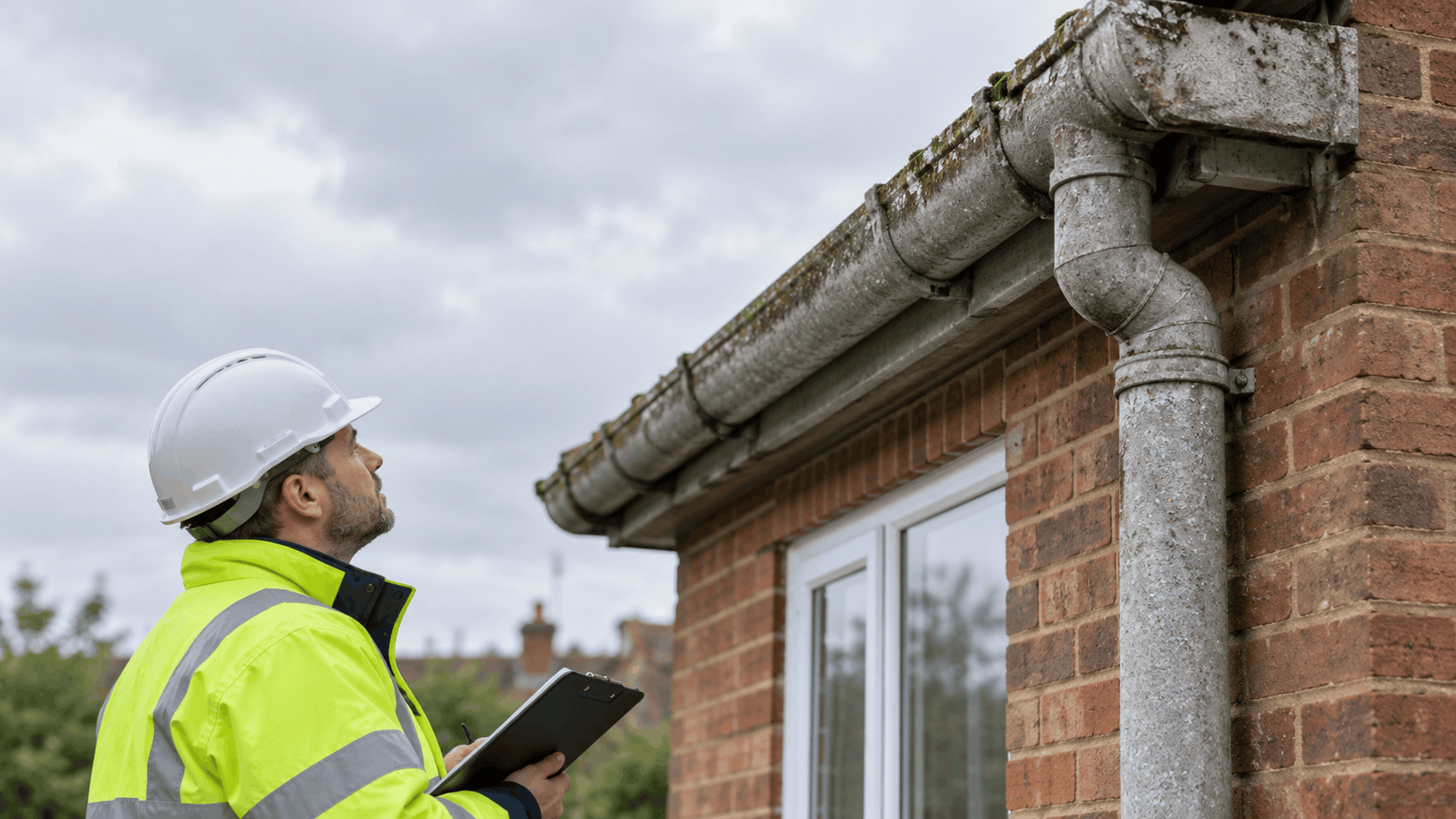
Asbestos Guttering and Downpipes: What Property Owners Need to Know
October 12th, 2026
Noticed some old guttering or downpipes on your property that are starting to deteriorate or need replacing? If your building […]
If you’ve uncovered old floor tiles while renovating a property, you might be wondering whether they contain asbestos and, more importantly, whether it’s safe to remove them.
Asbestos was used in some vinyl and thermoplastic floor tiles in older UK buildings. While these tiles are generally considered relatively low risk when left intact, that can change once they’re broken, damaged or lifted.
Before removing old flooring, it’s important to know what you’re dealing with. In this guide, we’ll look at how asbestos floor tiles are identified, when they can pose a risk and what your options are if asbestos is found.
Asbestos floor tiles are flooring products manufactured with asbestos fibres incorporated into the material. Asbestos was added to help make the tiles strong, durable and resistant to wear, making them well suited to areas that needed a hard-wearing floor covering.
Unlike more friable asbestos-containing materials, the fibres within these tiles are tightly bound into the material. This is one reason intact asbestos floor tiles are generally considered lower risk, although that can change if they’re damaged or disturbed.
It’s also worth looking beyond the tiles themselves. Some adhesives and mastics used to fix older flooring in place contained asbestos too, so these may also need to be considered when flooring is being investigated or removed.
Unfortunately, there’s no single appearance that gives an asbestos floor tile away.
They can vary in colour, pattern, size and finish, and many look very similar to flooring that doesn’t contain asbestos. You might find them laid directly onto the floor, or only discover them after pulling up carpet, laminate or another newer floor covering.
You may also notice black or brown adhesive beneath older tiles. This can require further investigation too, as some flooring adhesives and mastics contain asbestos.
While the age and appearance of a floor can give you reason to suspect asbestos, you can’t confirm whether it’s present simply by looking at it.
Asbestos-containing floor tiles can be found in all sorts of older properties, particularly in areas where hard-wearing flooring was needed.
Common locations include:
In many cases, the original tiles are no longer the visible floor surface. They may have been covered with carpet, laminate or newer flooring over the years and only come to light when that flooring is lifted during renovation or refurbishment work.
You can’t confirm whether floor tiles contain asbestos simply by looking at them. Their age, style and the age of the building may give you reason to suspect asbestos, but similar-looking flooring was also manufactured without it.
If the property already has an asbestos register, this is a good place to start. Check whether the flooring, or any materials beneath it, have previously been identified as containing or potentially containing asbestos.
If there is no existing information, an asbestos survey can establish whether the flooring contains asbestos. A surveyor can assess the suspected material and, where necessary, safely take representative samples for laboratory analysis.
The type of survey you need will depend on what you’re planning to do. An asbestos management survey may be appropriate where flooring needs to be identified and managed during the normal use of a building. If you’re planning refurbishment work that will involve lifting or disturbing old flooring, a refurbishment and demolition survey may be required for the affected area.
Don’t snap, cut or lift a suspected tile to try to identify it yourself. Having the flooring professionally surveyed means you can confirm what you’re dealing with before deciding whether it can remain in place or needs to be removed.
Compared with more friable asbestos-containing materials, such as pipe lagging, asbestos within floor tiles is generally much more firmly bound into the material. As a result, tiles that are intact and in good condition usually present a relatively low risk of fibre release.
The risk increases when the flooring is damaged or disturbed. Breaking, drilling, sanding or grinding asbestos-containing tiles can release fibres that would otherwise remain bound within the material.
This is why the condition of the flooring and what you’re planning to do with it matter. A floor that can remain untouched may need a very different approach to one that’s about to be lifted as part of a refurbishment.
It’s easy to focus on the tiles themselves, but the adhesive underneath shouldn’t be overlooked.
Some older flooring was fixed using bitumen-based adhesives or mastics that can also contain asbestos. This may appear as a black or brown layer beneath the tiles and can be exposed once the flooring is lifted.
You shouldn’t assume the adhesive is asbestos-free just because the tiles have already been identified or removed. If you’re planning to lift or replace older flooring, it’s important that both the tiles and any adhesive beneath them are considered before work begins.
Yes. Finding asbestos in floor tiles doesn’t automatically mean they need to be removed.
If the tiles are intact, in good condition and unlikely to be disturbed, it may be appropriate to manage them in place. In some cases, they can also be covered with a suitable new flooring system rather than removed.
The right approach will depend on the condition of the tiles, how the room is used, whether they’re likely to be disturbed and any maintenance or refurbishment work planned for the area.
If you’re considering covering asbestos floor tiles or leaving them in place, professional advice can help determine whether this is suitable for the specific flooring and how it should be managed going forward.
If a known or suspected asbestos floor tile is damaged, avoid disturbing it any further. Don’t sand, scrape, drill or break the material, and don’t use a standard vacuum cleaner to remove any dust or debris.
Where appropriate, prevent access to the affected area so the material isn’t disturbed further and seek professional asbestos advice. The condition of the flooring can then be assessed and the appropriate next steps determined.
The type of asbestos survey you need will depend on how the building is being used and, importantly, whether you’re planning any work that could disturb the flooring.
An asbestos management survey is used to identify asbestos-containing materials that could be disturbed during the normal occupation, use and routine maintenance of a building.
This can include accessible flooring and, where appropriate, materials beneath floor coverings. Any asbestos-containing floor tiles identified can then be assessed for their condition and managed accordingly.
If you’re planning work that will involve lifting old flooring, removing screeds, altering the floor structure or accessing previously hidden areas, a refurbishment and demolition survey may be required for the affected area.
This is a more intrusive survey designed to identify asbestos-containing materials that could be disturbed by the planned work, including materials that may be concealed beneath existing floor coverings.
Not necessarily. Work involving asbestos-containing vinyl or thermoplastic floor tiles does not automatically require a licensed asbestos contractor, and some types of work can be classed as non-licensed.
However, non-licensed doesn’t mean the work is risk-free or can be carried out without precautions. The condition of the tiles, how firmly the asbestos is bound within them and the way the flooring will be disturbed all need to be considered.
Anyone carrying out asbestos work must have the appropriate training and use suitable working methods and controls to minimise fibre release and prevent contamination.
If you’re unsure what type of work is required, having the flooring professionally assessed before removal can establish the appropriate approach.
Where removal is the most appropriate option, asbestos floor tiles should be removed using controlled methods that minimise damage to the tiles and prevent unnecessary fibre release.
The exact approach will depend on the flooring, its condition, the materials beneath it and the property itself.
Before removal begins, the flooring is assessed to establish which materials contain asbestos, their condition and how much needs to be removed.
This is also an opportunity to consider whether adhesives or other materials beneath the tiles may contain asbestos and need to be included within the work.
The work area is prepared and access restricted to prevent other people entering while removal is taking place. Appropriate controls are then put in place based on the flooring and the work required.
The tiles are carefully lifted using controlled techniques designed to keep them as intact as possible. Avoiding unnecessary breaking, cutting or abrasion helps minimise the potential for asbestos fibres to be released during removal.
Whether you need asbestos removal from a home or across a larger commercial property, the method used should reflect the condition and extent of the flooring involved.
Once the tiles have been lifted, any adhesive remaining beneath them also needs to be considered. If this contains asbestos, it will need to be appropriately managed as part of the work rather than treated as ordinary flooring adhesive.
Following removal, the area is carefully cleaned using appropriate asbestos cleaning methods to remove any remaining dust, debris or contamination associated with the work.
Removed tiles, asbestos-containing adhesive and contaminated materials are appropriately packaged and handled as asbestos waste. They are then transported and disposed of at an authorised waste facility in accordance with the relevant requirements.
Some work involving asbestos-containing floor tiles can be classed as non-licensed, but that doesn’t mean they should be treated like ordinary flooring or approached as a straightforward DIY removal job.
Breaking the tiles or using power tools to cut, sand or grind them can increase the potential for asbestos fibres to be released. There may also be asbestos-containing adhesive or other materials beneath the flooring that aren’t immediately obvious.
Having the flooring professionally assessed before you start means you know exactly what you’re dealing with. Where removal is needed, using an experienced asbestos removal contractor can also help ensure the correct controls are used and the resulting asbestos waste is handled and disposed of appropriately.
Asbestos-containing floor tiles were widely used during the 20th century and may still be present in buildings constructed or refurbished before asbestos was fully banned in the UK in 1999.
The age of the flooring can help indicate whether asbestos may be present, but it cannot confirm it. Older tiles should be properly identified if they’re going to be disturbed.
Yes. Asbestos-containing tiles may have been covered with carpet, laminate, vinyl or other newer flooring rather than removed.
This means they sometimes aren’t discovered until existing floor coverings are lifted during renovation or refurbishment work.
It can. Some older bitumen-based adhesives and mastics used beneath flooring contained asbestos, but you cannot tell whether an adhesive contains asbestos simply because it is black.
If there is any uncertainty, the adhesive can be assessed and, where necessary, sampled as part of an asbestos survey.
In some circumstances, intact asbestos floor tiles can be left in place and covered with new flooring rather than removed. Whether this is appropriate will depend on their condition, the new flooring system and whether the installation itself would disturb the asbestos-containing material.
Stop what you’re doing and avoid disturbing the damaged tile or any resulting debris further. Don’t sand, scrape or vacuum the area with a standard household vacuum cleaner.
If the tile is known or suspected to contain asbestos, seek professional advice so the situation can be assessed and the appropriate next steps taken.
Getting an asbestos floor tile wet does not remove the asbestos or make the material safe to disturb. The main consideration is still the condition of the tile and whether activities such as breaking, cutting, sanding or removal could release fibres.
Yes. Asbestos may be present in adhesives or mastics beneath older flooring, so identifying the tiles alone may not always give you the full picture of what’s present within the floor.
This is particularly important before refurbishment work that will expose or disturb the layers beneath existing tiles.
There is no standard timescale. It will depend on factors including the amount of flooring involved, its condition, accessibility, the materials beneath it and the controls required to complete the work safely.
A professional assessment of the flooring can provide a clearer idea of the work involved and how long removal is likely to take.
Found old floor tiles and aren’t sure what you’re dealing with? Malrod can arrange an asbestos survey to establish whether asbestos is present and advise you on the appropriate next steps.
If you’re planning to replace or refurbish flooring, we can carry out the appropriate survey before work begins. Where asbestos has already been confirmed and removal is required, our team can safely manage the removal and disposal process.
To discuss your requirements, call us today on 01942 811591 or complete our contact form and a member of our team will be in touch.
Read more
October 12th, 2026
Noticed some old guttering or downpipes on your property that are starting to deteriorate or need replacing? If your building […]
Read more
September 30th, 2026
Before asbestos removal begins, there needs to be a written plan for how the work will be carried out safely. […]
Read more

September 28th, 2026
Asbestos in older boilers and industrial plant wasn’t only used in pipe lagging and other forms of insulation. It was […]