Found an old water tank in your loft? Asbestos cement was commonly used to manufacture water tanks in older properties, and some remain in place long after they’re no longer needed.
In this guide, we’ll explain how to recognise a possible asbestos water tank, the risks it may present and what your options are if you find one in your property.
What Is an Asbestos Water Tank?
An asbestos water tank is a water storage tank made from asbestos cement, a material that combines cement with asbestos fibres to improve its strength and durability.
Asbestos cement was widely used in the UK for products such as roofing sheets, pipes and water tanks because it was strong, resistant to corrosion and relatively inexpensive to manufacture.
These tanks were commonly used to store cold water in domestic and commercial properties before alternative materials, such as plastic, became more widely used.
Where Are Asbestos Water Tanks Commonly Found?
Asbestos cement water tanks are most commonly associated with older properties, particularly those with plumbing systems installed before 2000. Asbestos was fully banned in the UK in 1999, although older tanks may still remain in place today.
In homes, they’re typically found in lofts, where they were installed as part of older plumbing and heating systems.
They may also be found in:
- Roof spaces and other elevated storage areas
- Older commercial and industrial buildings
- Plant rooms and service areas
It’s not unusual to find an old tank that’s no longer connected to the property’s water supply. When plumbing or heating systems are upgraded, redundant tanks are sometimes left in place, particularly if they’re too large to easily remove through the loft hatch.
As a result you might only discover them during renovations, loft conversions or property inspections.
How Can You Identify an Asbestos Water Tank?
If you’ve found an old water tank, its age and appearance may provide clues about whether it contains asbestos. There are several characteristics worth looking out for, although appearance alone isn’t enough to confirm what a tank is made from.
What Does an Asbestos Cement Water Tank Look Like?
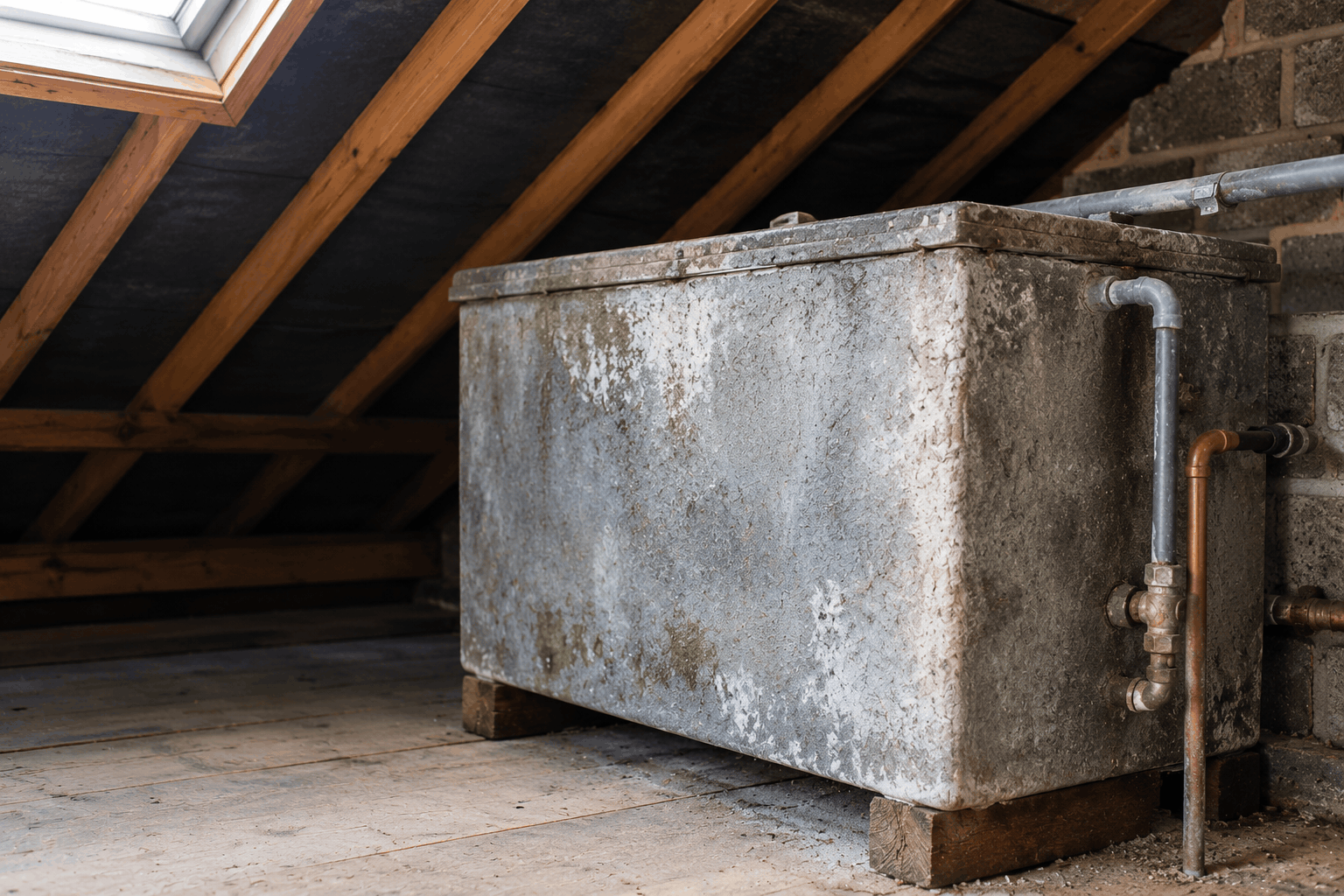
Older asbestos cement water tanks often have several recognisable features:
- Colour: Typically grey, although the surface may have darkened or become discoloured with age.
- Material: A hard, rigid, cement-like surface rather than the smooth finish of a modern plastic tank.
- Shape: Often rectangular or square, with relatively thick walls.
- Lid: Some have a matching cement-based lid, although this may be missing or made from another material.
- Surface condition: Older tanks may have a rough or weathered appearance, sometimes with visible staining or surface deterioration.
Can You Tell Whether a Water Tank Contains Asbestos Just by Looking?
No. While asbestos cement tanks can have a distinctive appearance, other cement-based materials may look very similar.
Photographs can sometimes help an asbestos professional assess whether a material is suspicious, but they cannot confirm the presence or absence of asbestos.
You should also avoid scratching, breaking or drilling into the tank to try to identify what it’s made from, as this could potentially release asbestos fibres.
How Can You Confirm Whether a Water Tank Contains Asbestos?
If you’re unsure whether a water tank contains asbestos, the first step is to check whether any information about it already exists.
For example, an asbestos survey or previous property records may identify the tank and the material it’s made from. Original manufacturer information may also be useful where it can be reliably matched to the tank.
If no reliable information is available, a professional asbestos assessment may be needed. Where appropriate, a sample can be collected safely and analysed by a suitably accredited laboratory to confirm whether asbestos is present.
At Malrod, we provide asbestos surveys to help identify asbestos-containing materials in properties and establish what action, if any, may be required.
Is an Asbestos Water Tank Dangerous?
An asbestos cement water tank doesn’t automatically pose a significant risk simply because it contains asbestos.
Unlike more friable asbestos materials, asbestos cement holds the fibres within a solid cement matrix. This means an intact, undisturbed tank generally presents a low risk of airborne fibre exposure.
The main concern arises when the material is damaged or disturbed, as activities such as drilling, cutting or breaking the tank can release asbestos fibres into the air. If inhaled, these fibres can cause serious asbestos-related diseases.
This is why the condition of the tank, and whether it’s likely to be disturbed, are important when assessing the risk.
Can You Leave an Asbestos Water Tank in Place?
If an old asbestos cement tank is in good condition, isn’t being disturbed and doesn’t interfere with other work, leaving it in place may be appropriate.
However, its location should be recorded and anyone carrying out future work in the area should be made aware of it.
If you’re planning a loft conversion, plumbing alterations or other renovations, it’s worth having the tank assessed beforehand to establish whether it needs to be removed as part of the project.
What Should You Do If an Asbestos Water Tank Is Damaged?
If you discover that an asbestos water tank is cracked, broken or deteriorating, the most important thing is to avoid disturbing it further.
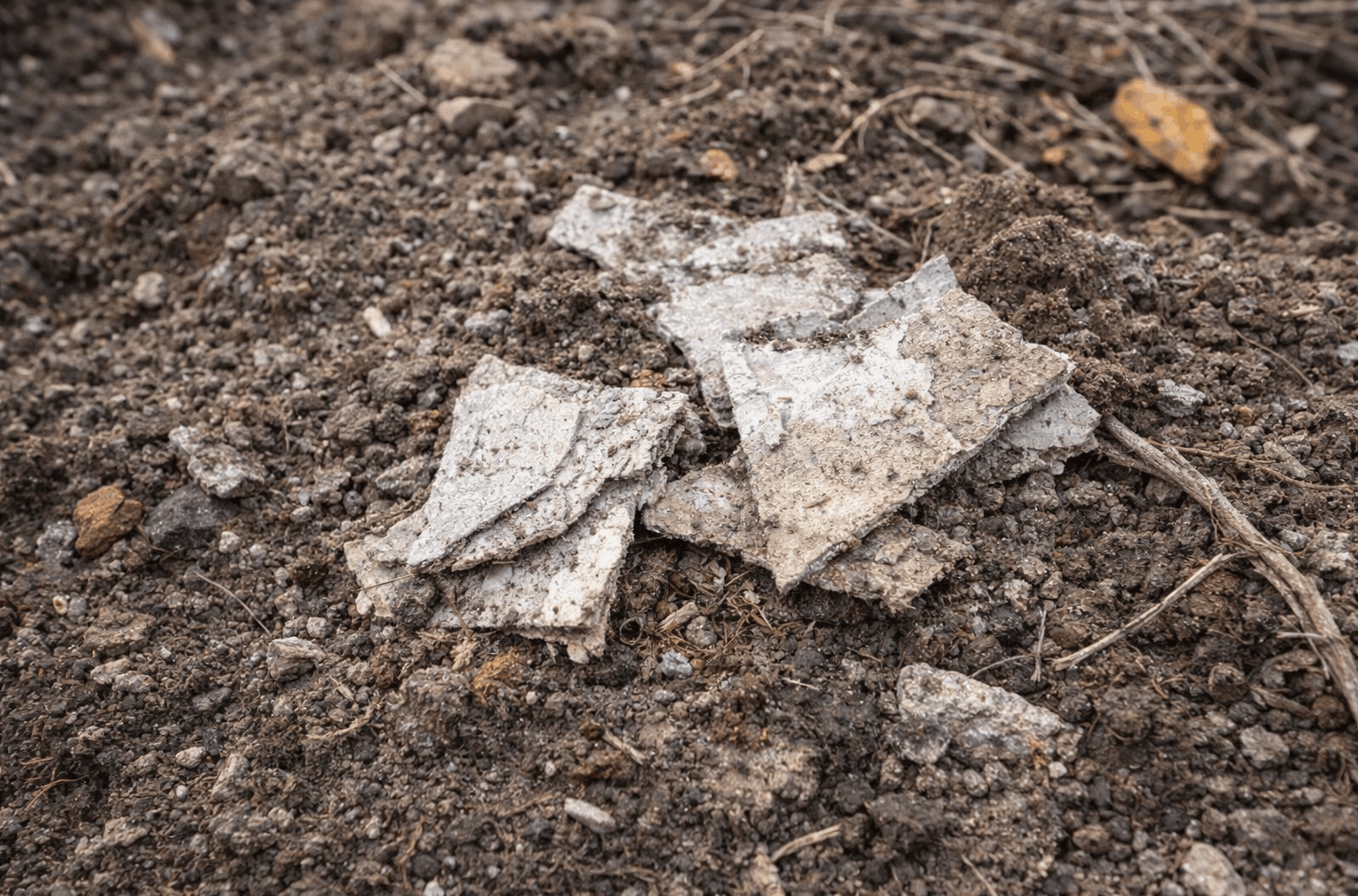
Don’t attempt to repair the damage yourself, and avoid drilling, cutting, scraping or breaking the tank. If there are fragments or debris nearby, don’t sweep them up or use an ordinary household vacuum cleaner, as this could spread asbestos fibres.
Where possible, keep people away from the affected area and avoid carrying out any further work around the tank until it has been assessed.
A professional asbestos contractor can assess the condition of the tank and advise whether it can safely remain in place or whether removal is necessary.
How Are Asbestos Water Tanks Removed?
The approach to removing an asbestos water tank depends on several factors, including its size, condition, location and how easily it can be accessed.
Where possible, asbestos cement tanks should be removed intact to minimise the risk of releasing fibres. However, this isn’t always straightforward, particularly when a large tank is located in a loft with a narrow access hatch.
Before removal, an asbestos contractor will need to assess the tank and surrounding area to establish a suitable method of work. This includes considering how the tank can be safely accessed, handled and moved without unnecessary damage.
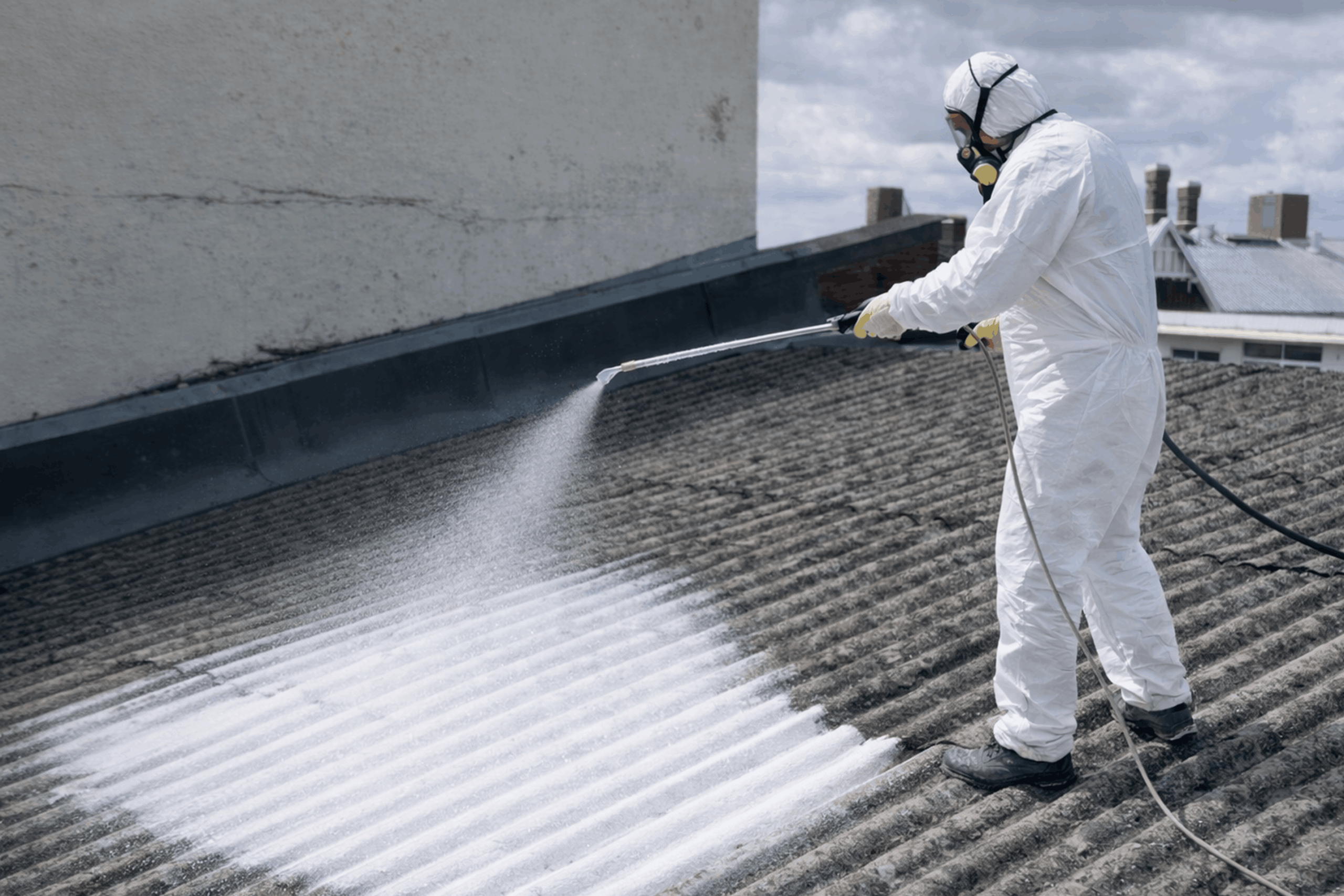
Appropriate precautions must be used to control potential asbestos exposure, and the removed tank must be packaged, transported and disposed of as asbestos waste in accordance with the relevant requirements.
Malrod provides professional asbestos removal services across the UK, including domestic asbestos removal for homeowners dealing with asbestos-containing materials in their properties.
Does Removing an Asbestos Cement Water Tank Require a Licensed Contractor?
Not always. Most asbestos cement water tank removal work can be carried out without an HSE asbestos licence, provided the relevant requirements are met.
However, the classification depends on the condition of the material and how the work will be carried out. Some asbestos cement work may be notifiable, while particularly hazardous circumstances may require a licensed contractor.
Regardless of whether a licence is required, the work must still be properly assessed and planned, with suitable precautions to control asbestos exposure and ensure the waste is handled and disposed of correctly.
How Much Does Asbestos Water Tank Removal Cost?
The cost of removing an asbestos water tank will depend on its size, condition, location and the complexity of the removal.
For example, removing a tank from an easily accessible area may involve less work than dealing with a large tank in a confined loft space.
For more information, including an asbestos water tank removal price example, read our guide to asbestos removal costs in the UK.
Need Help With an Asbestos Water Tank?
If you’ve found an old water tank in your property and suspect it contains asbestos, Malrod can help you establish the appropriate next steps.
We provide asbestos surveys and professional asbestos removal services, including the removal of asbestos-containing materials from domestic properties.
To discuss your requirements, call us today on 01942 811591 or complete our contact form and a member of our team will be in touch.
Asbestos Water Tank FAQs
Do All Old Water Tanks Contain Asbestos?
No. Although asbestos cement was used to manufacture water tanks in the UK, older tanks were also made from other materials, including galvanised steel and fibreglass.
A tank’s age, appearance and construction can help establish whether asbestos is a possibility, but testing may be needed to confirm what it’s made from.
Can an Asbestos Water Tank Contaminate Drinking Water?
Asbestos fibres may enter water if asbestos cement materials deteriorate. However, the health risks associated with swallowing asbestos fibres are different from those associated with inhaling them.
According to the World Health Organization (WHO), there is currently no consistent evidence that ingesting asbestos through drinking water causes adverse health effects. As a result, it has not established a health-based guideline value for asbestos in drinking water.
The better-established health risk is inhaling airborne asbestos fibres when asbestos-containing materials are damaged or disturbed.
If you suspect an asbestos cement tank is still supplying drinking water, seek advice from a suitably qualified plumbing or water-quality professional about its condition and whether it should be replaced.
Can I Remove an Asbestos Water Tank Myself?
If you haven’t received the appropriate training for working with asbestos, you shouldn’t attempt to remove the tank yourself.
Although asbestos cement removal doesn’t always require a licensed contractor, the work still needs to be carried out by someone with the necessary training, knowledge and equipment to control asbestos exposure.
This is particularly important for water tanks in lofts, where restricted access and the size or weight of the tank can make removal difficult without damaging it.
The safest approach is to use a competent asbestos removal contractor who can assess the tank, plan its removal and arrange for the waste to be disposed of correctly.