

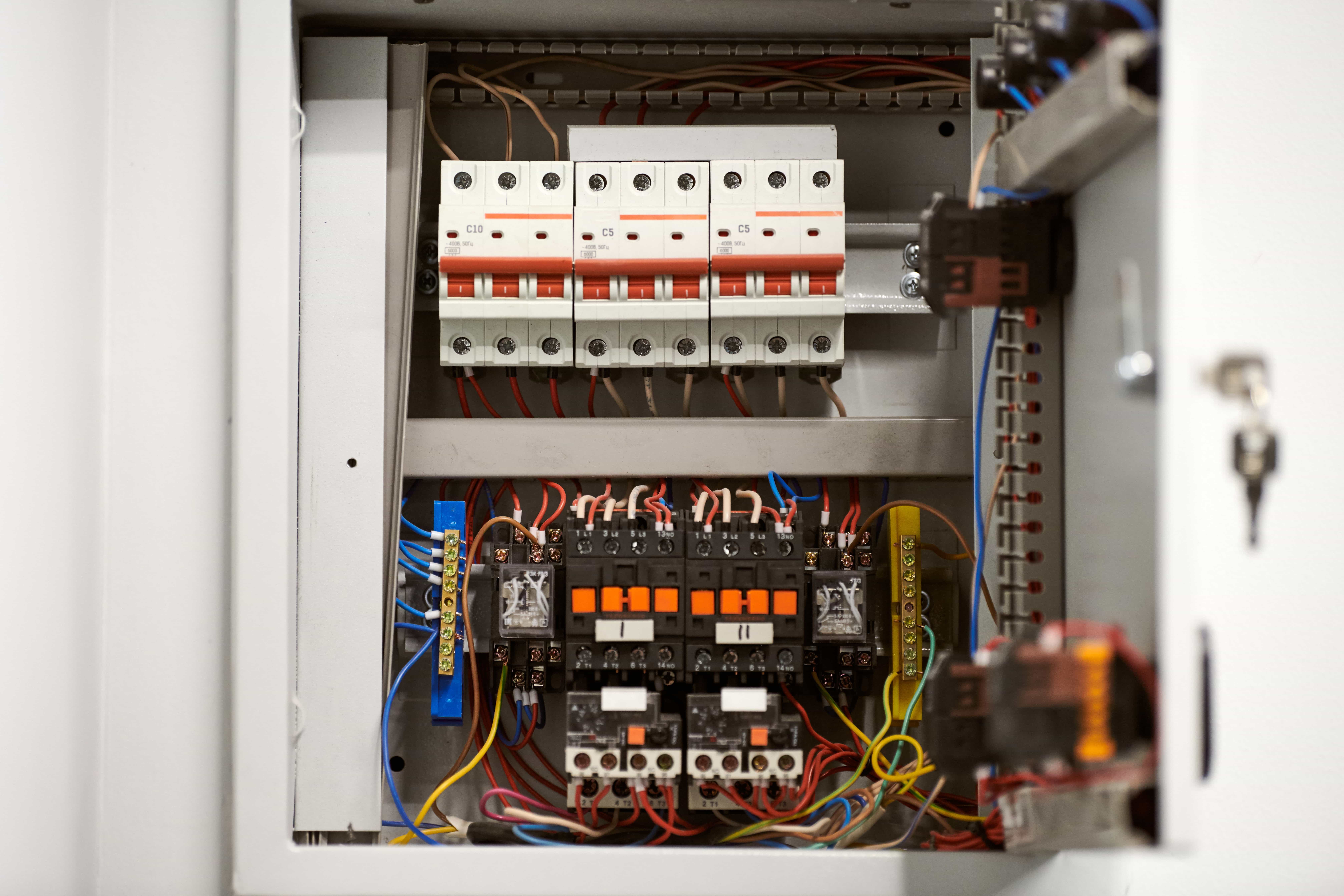
Older electrical switchgear and fuse boxes can contain asbestos components that may have remained undisturbed for decades.
The issue can arise when this equipment needs to be maintained, upgraded or replaced, particularly if previously enclosed components need to be dismantled or removed. So, where might asbestos be found in older electrical equipment, and what should be checked before work begins?
Why Was Asbestos Used in Electrical Equipment?
Asbestos was widely used for its resistance to heat and fire, as well as its insulating properties.
These characteristics made it suitable for components designed to provide protection against the heat and arcing that can occur within electrical equipment.
In older fuse boxes and switchgear, asbestos-containing materials may be found in components such as:
- Arc shields or flash guards
- Fuse assemblies
- Insulating components
- Heat-resistant panels
- Asbestos textiles used as flash protection behind fuses
HSE specifically identifies asbestos flash guards in fuse boxes and provides guidance for asbestos-containing arc shields within electrical switchgear.
These materials may not be visible from the outside of the equipment, which is why the possibility of asbestos needs to be considered before older switchgear or fuse boxes are opened up, dismantled or replaced.
Where Might Asbestos Be Found in Switchgear and Fuse Boxes?
The location of asbestos within older electrical installations varies depending on the age, manufacturer and design of the equipment. It may be contained within individual electrical components or in materials installed around the equipment for fire protection.
Fuse Boxes and Fuse Assemblies
Some old-style fuse boxes contain asbestos within the fuse assemblies themselves. HSE specifically identifies asbestos flash guards and asbestos textiles used behind fuses to provide protection from heat and electrical arcing.
Other asbestos-containing insulating or heat-resistant components may also be present depending on the design of the equipment.
Importantly, these materials may be inside the fuse box and not obvious from its external appearance. Opening or dismantling the equipment without knowing what’s inside could therefore disturb an ACM that had previously remained enclosed.
Electrical Switchgear
Asbestos was also used in some older electrical switchgear, including in arc shields designed to provide protection from electrical arcing.
The exact components and their location will vary between different types, ages and manufacturers of switchgear. This makes it important to establish what equipment you’re dealing with rather than assuming that all older installations were constructed in the same way.
Around the Electrical Equipment
The equipment itself isn’t the only place to consider. Asbestos-containing materials may also be present within the surrounding building fabric.
For example, HSE identifies asbestos insulating board (AIB) as a material that can be found behind fuse boxes. Other panels or boards associated with fire protection may also need to be considered if they will be disturbed during the planned electrical work.
Can You Tell Whether Switchgear Contains Asbestos?
You can’t reliably determine whether an electrical component contains asbestos simply by looking at it.
Where older equipment is due to be maintained or replaced, useful information may come from:
- The age of the equipment
- Manufacturer and model details
- Equipment records or manuals
- Existing asbestos information for the premises
- The manufacturer or a specialist service engineer
- Sampling and analysis where appropriate
HSE advises checking with the equipment manufacturer or service engineer where possible. If there isn’t enough information to establish whether older equipment contains asbestos, it should be presumed to contain asbestos unless there is evidence that it does not.
This doesn’t mean dismantling the equipment to investigate it yourself. Don’t open up or take apart old switchgear simply to find out whether asbestos is present. If further investigation is needed, it should be planned so that potentially asbestos-containing components aren’t unnecessarily disturbed.
Why Can Routine Electrical Maintenance Create a Risk?
An asbestos-containing component may have remained safely enclosed within electrical equipment for many years. The situation can change when maintenance or replacement work requires that equipment to be opened up or dismantled.
This could include:
- Removing old fuse assemblies
- Replacing switchgear
- Removing arc shields or flash guards
- Opening or dismantling equipment
- Cleaning inside older equipment
- Drilling or cutting surrounding panels
- Removing redundant electrical installations
The presence of asbestos doesn’t automatically mean fibres are being released. The risk arises when an asbestos-containing material is disturbed or damaged during the work.
What Should Be Checked Before Maintaining or Replacing Old Switchgear?
Before work begins, establish exactly what equipment will be worked on and what the job will involve. Knowing that asbestos is present somewhere in an electrical room isn’t enough if you don’t know whether it’s within the equipment or materials that are about to be disturbed.
Checks may include:
- Identifying the age, manufacturer and model of the equipment where possible
- Reviewing existing asbestos information for the premises
- Checking whether the electrical equipment itself has previously been assessed
- Looking at manufacturer or service information where available
- Establishing which components the electrician intends to open, dismantle or remove
- Checking surrounding panels, boards and other materials that could also be affected
- Arranging further assessment or sampling where there isn’t enough information
Any assessment should reflect the actual work being planned. HSE states that before work likely to disturb asbestos begins, the risk assessment must be job-specific and consider all aspects of the work.
Does the Electricity Need to Be Isolated Before Asbestos Work?
Electrical safety and asbestos management both need to be considered when work involves asbestos-containing electrical equipment.
For example, HSE guidance for replacing an asbestos-containing fuse box states that a competent electrician should isolate and lock off the electricity supply and confirm that the system is not live before the asbestos work begins.
This may require coordination between the electrical contractor and whoever is carrying out the asbestos work so that isolation, asbestos removal and the installation or reconnection of replacement equipment happen in the correct order.
Does Asbestos-Containing Switchgear Always Need to Be Removed?
Not necessarily. The presence of asbestos alone doesn’t always mean that equipment has to be removed immediately.
Factors such as the condition of the ACM, whether it is likely to be disturbed and how the equipment will be maintained in future all need to be considered.
However, planned maintenance, upgrading or replacement can change the situation. If the work requires previously enclosed asbestos components to be disturbed, the ACM will need to be assessed and dealt with appropriately before or as part of the electrical work.
What Happens When Asbestos-Containing Switchgear Is Replaced?
Replacing switchgear known or suspected to contain asbestos requires the asbestos and electrical work to be planned together.
Typically, this will involve:
- Establishing whether asbestos is present and where it is located.
- Identifying which ACMs will be affected by the replacement.
- Assessing the asbestos work and the controls required.
- Arranging appropriate electrical isolation.
- Having the asbestos-containing components dealt with by people with the appropriate training and competence for the work.
- Ensuring asbestos waste is correctly contained and disposed of.
- Allowing the electrical contractor to complete the replacement and safely restore the supply as appropriate.
The exact approach will depend on the asbestos-containing material and the work being carried out. HSE publishes specific guidance for some non-licensed tasks involving asbestos-containing electrical equipment, but this shouldn’t be taken to mean that every job involving old switchgear can be approached in the same way.
Where asbestos needs to be dealt with as part of an electrical upgrade or replacement, Malrod provides asbestos removal and commercial asbestos removal services across the UK.
What If an Electrician Unexpectedly Finds Suspected Asbestos?
If suspected asbestos is discovered while electrical equipment is being opened or dismantled, stop work and don’t disturb the material further.
Keep other people away from the affected area where necessary and report the discovery so the material can be assessed before work continues.
If the material has already been damaged or disturbed, read our guide to what to do if asbestos is accidentally disturbed.
A Checklist Before Working on Older Electrical Equipment
Before maintenance or replacement begins, have you:
☐ Identified the equipment being worked on?
☐ Established its approximate age where possible?
☐ Checked the existing asbestos information?
☐ Confirmed whether the equipment itself has previously been assessed for asbestos?
☐ Reviewed manufacturer or service information where available?
☐ Established which components will be opened, dismantled or removed?
☐ Checked surrounding panels and building materials that may also be disturbed?
☐ Arranged further asbestos assessment where there isn’t enough information?
☐ Planned electrical isolation with a competent electrician?
☐ Agreed how any identified ACMs will be dealt with before work proceeds?
Asbestos in Electrical Switchgear FAQs
Do Old Fuse Boxes Contain Asbestos?
Some do. HSE identifies old-style fuse boxes that contain asbestos within their fuse assemblies, including asbestos flash guards and textiles used behind fuses.
Not every old fuse box will contain asbestos, so the age and design of the equipment, manufacturer information and any existing asbestos records should be considered before work begins.
What Is an Asbestos Flash Guard?
A flash guard is a component designed to provide protection from the heat and electrical arcing that can occur within electrical equipment. Asbestos was historically used for this purpose because of its heat and fire-resistant properties.
Asbestos-containing flash guards can be found within some older fuse boxes and switchgear.
Can an Electrician Remove an Asbestos-Containing Fuse Box?
Electrical competence alone doesn’t automatically mean someone is competent to carry out work involving asbestos.
The asbestos work needs to be assessed first so that the appropriate controls, training and equipment can be determined. Some work involving asbestos-containing electrical equipment is classed by HSE as non-licensed work, but this depends on the material, its condition and the work being carried out.
A competent electrician may also be needed to safely isolate and later reconnect the electrical supply as part of the overall job.
What Should an Electrician Do If They Discover Suspected Asbestos?
If a material suspected of containing asbestos is unexpectedly discovered, work should stop and the material shouldn’t be disturbed further.
The discovery should be reported and the material assessed before work continues. If it has already been damaged or disturbed, additional steps may be needed to prevent further exposure and manage the affected area safely.