

Read more
Asbestos Guttering and Downpipes: What Property Owners Need to Know
October 12th, 2026
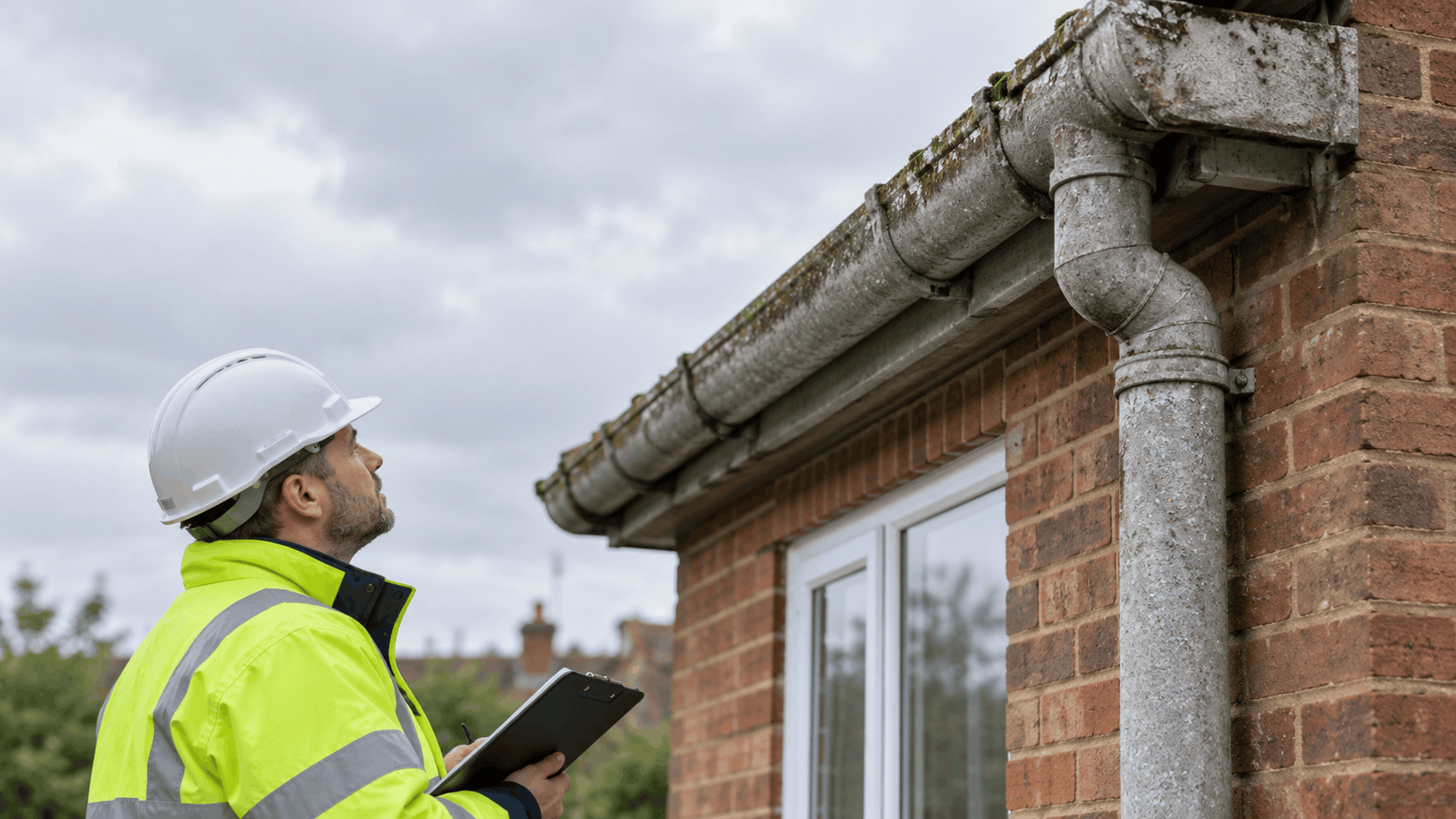
Noticed some old guttering or downpipes on your property that are starting to deteriorate or need replacing? If your building […]

Asbestos was commonly used to insulate pipes and heating systems in older buildings due to its heat-resistant properties. However, pipe lagging is considered a higher-risk asbestos-containing material (ACM) because it can be highly friable, meaning fibres may be released more easily if the material becomes damaged or disturbed.
Because of the potential risks involved, suspected asbestos pipe lagging should be professionally identified and, where removal is required, handled using appropriate controls.
Asbestos pipe lagging is a type of insulation that was commonly applied around pipes, boilers and heating systems. It was used for its thermal insulation and fire-resistant properties, helping to retain heat and protect surrounding areas from high temperatures.
It can be found in a wide range of older buildings and was applied in different forms and finishes. As a result, asbestos pipe lagging can vary considerably in appearance and cannot reliably be identified simply by looking at it.
If pipe insulation is suspected to contain asbestos, it should be left undisturbed until it can be professionally assessed and, where necessary, tested.
Asbestos pipe lagging is particularly associated with older buildings containing extensive heating, boiler or pipework systems. Because much of this infrastructure is located away from everyday occupied areas, asbestos lagging may remain unnoticed until maintenance or refurbishment work is planned.
Common locations include:
This makes appropriate asbestos surveys particularly important before intrusive work is carried out in areas containing older pipework.
Asbestos pipe lagging is a higher-risk asbestos-containing material because of how easily it can become damaged and release fibres. Unlike other, more firmly bonded asbestos products, lagging can be relatively friable (soft and fragile), particularly as it deteriorates with age.
This makes it particularly important to avoid touching or interfering with suspected lagging until it has been properly identified.
Pipework is often located in areas where plumbers, heating engineers, electricians and other contractors need to carry out maintenance or repair work.
Activities such as drilling, cutting, replacing pipework or removing insulation can significantly disturb asbestos lagging if its presence has not been identified beforehand.
Having the appropriate asbestos information available before work begins helps prevent accidental disturbance and allows the necessary precautions to be put in place.
It is not possible to reliably confirm whether pipe lagging contains asbestos from its appearance alone. While the age and history of a building may indicate that asbestos is more likely to be present, a professional asbestos survey is required to establish what the material contains.
Existing asbestos survey information should be checked first, particularly if the building already has records of known asbestos-containing materials. If the pipe lagging has not previously been identified, an asbestos survey may be required.
You should never break, cut or remove part of suspected pipe lagging to take a sample yourself, as doing so could release asbestos fibres.
An asbestos management survey is designed to identify asbestos-containing materials that could be disturbed during normal occupation, routine maintenance and everyday use of a building.
Where accessible pipe lagging is present, a management survey can help establish whether it contains asbestos and assess its condition so that it can be managed appropriately.
If refurbishment, demolition or other intrusive building work is planned, a refurbishment and demolition survey will be required for the area affected by the proposed work.
This type of survey is more intrusive and is designed to identify asbestos-containing materials that may be hidden within the building structure. This is particularly important where older pipework runs above ceilings, behind walls, through service ducts or within other areas that would not normally be accessed.
If asbestos pipe lagging is damaged or accidentally disturbed, stop work immediately and avoid touching or attempting to clean up the material.
Where appropriate, restrict access to the affected area to prevent further disturbance and inform the person responsible for managing the building. A professional asbestos assessment can then be arranged to determine the condition of the material and what action is required.
Work involving asbestos pipe lagging will generally need to be carried out by a licensed asbestos contractor due to the potential for significant fibre release.
Licensed removal involves strict controls designed to protect workers and prevent asbestos fibres spreading beyond the work area.
Removing asbestos pipe lagging requires careful planning and strict controls due to the risk of fibres being released during the work. The exact process will depend on the location, condition and extent of the material.
Before removal begins, the asbestos contractor will assess the location, condition and extent of the pipe lagging. This information is used to plan how the work will be carried out and what controls are required.
Where required, a controlled enclosure will be created around the work area to prevent asbestos fibres spreading to other parts of the building.
The enclosure may be maintained under negative pressure, helping contain airborne fibres within the controlled area. Access is also carefully managed while removal is underway.
Trained asbestos removal operatives use specialist equipment and controlled techniques to carefully remove the lagging while minimising fibre release.
The method used will depend on the condition of the material, the pipework involved and the surrounding environment.
Once the lagging has been removed, the work area is thoroughly cleaned to remove residual asbestos contamination. Operatives and equipment also follow appropriate decontamination procedures before leaving the controlled area.
Removed pipe lagging and other contaminated materials are securely packaged and handled as asbestos waste. They are then transported and disposed of at an appropriately authorised facility in accordance with the relevant requirements.
Finding asbestos pipe lagging does not automatically mean it must be removed. In some circumstances, it may be possible to manage the material in place if it remains in a suitable condition and is unlikely to be disturbed.
Factors such as its condition, accessibility, likelihood of disturbance and any planned maintenance or refurbishment work will all influence the appropriate approach.
However, because pipe lagging is a higher-risk asbestos-containing material, any decision to leave it in place should be based on a professional assessment of the material and the risks involved.
Yes. Although asbestos was fully banned in the UK in 1999, asbestos-containing materials installed before the ban can still remain in older buildings. Pipe lagging may therefore still be present around older heating systems and pipework, particularly in commercial, industrial and public buildings.
Pipe lagging can contain different types of asbestos, including chrysotile (white asbestos), amosite (brown asbestos) and crocidolite (blue asbestos).
The type present cannot be reliably determined from appearance alone, so suspected materials should be professionally sampled and analysed where identification is required.
No. Some asbestos pipe lagging may be clearly visible around exposed pipework, while other materials can be concealed above ceilings, inside service ducts, behind walls or within other inaccessible areas.
This is particularly important when refurbishment or demolition work is planned, as previously hidden pipework may be disturbed during intrusive work.
In some circumstances, repair or encapsulation may be appropriate instead of complete removal. This will depend on factors such as the condition and location of the material and how likely it is to be disturbed in the future.
Because pipe lagging is a higher-risk asbestos-containing material, the appropriate course of action should always be determined through a professional assessment.
Following licensed asbestos removal, the work area must undergo the appropriate clearance process before it can be returned to normal use.
This typically involves a four-stage clearance procedure carried out by an independent analyst, including an initial assessment of the work area, a thorough visual inspection and air monitoring. Once the required standards have been met, a Certificate of Reoccupation can be issued and the enclosure can be dismantled.
There is no fixed timescale for removing asbestos pipe lagging. The length of the project will depend on factors such as the amount of material present, its location and condition, accessibility and the complexity of the enclosure and removal work required.
A professional assessment allows the contractor to understand the scope of the work and provide a more accurate indication of the expected timescale.
Read more
October 12th, 2026
Noticed some old guttering or downpipes on your property that are starting to deteriorate or need replacing? If your building […]
Read more
September 30th, 2026
Before asbestos removal begins, there needs to be a written plan for how the work will be carried out safely. […]
Read more

September 28th, 2026
Asbestos in older boilers and industrial plant wasn’t only used in pipe lagging and other forms of insulation. It was […]