

Read more
How to Identify Asbestos in Plaster and Plasterboard?
October 16th, 2026
Planning to strip a wall, replace a ceiling or renovate an older property? You might be wondering whether the plaster […]
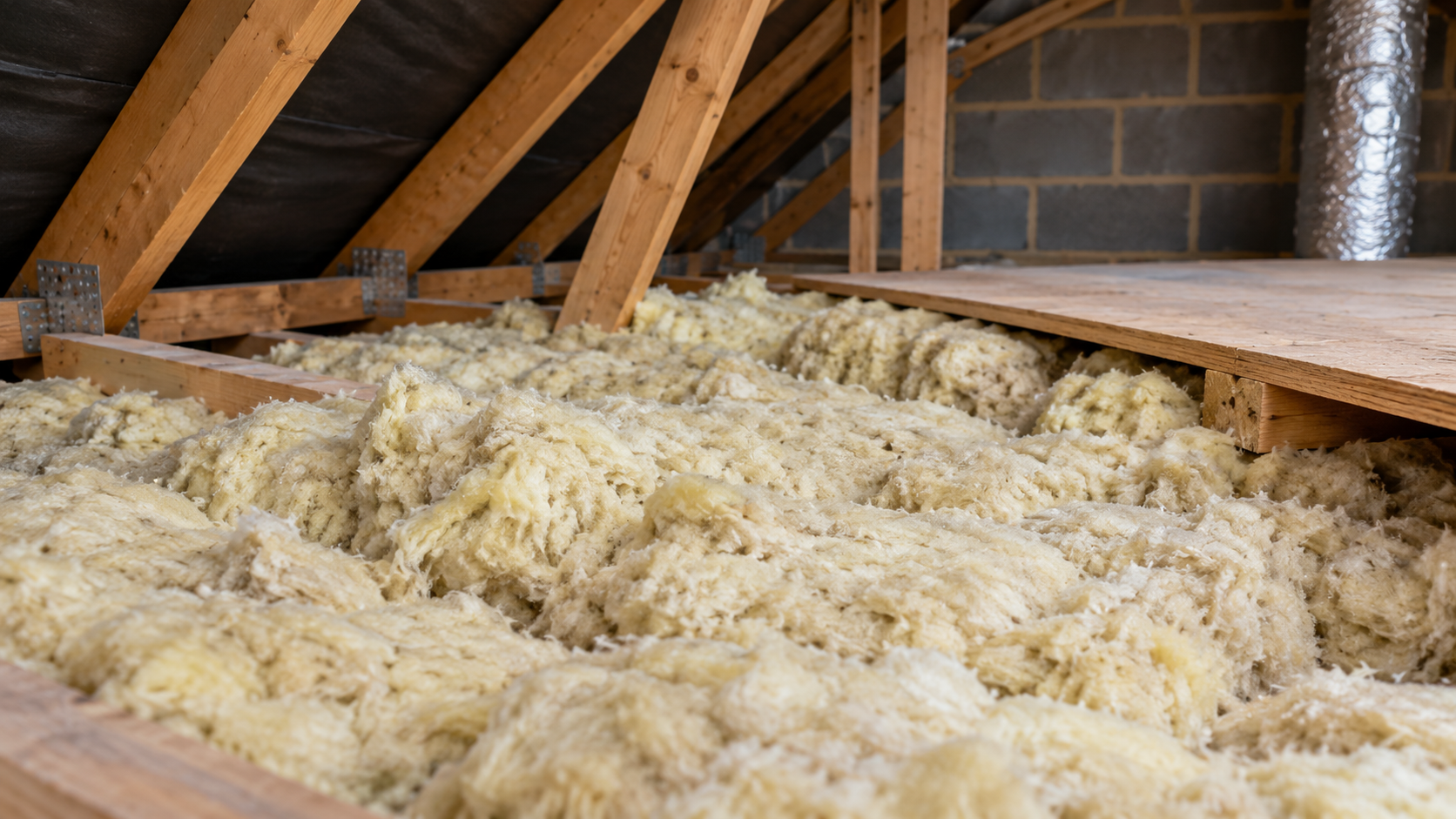
If you’ve come across some unfamiliar insulation in your loft, you might be wondering what it’s made from and whether it could contain asbestos.
Most loft insulation doesn’t contain asbestos, but certain older materials can. In this guide, we’ll explain which types of insulation may pose a risk, what to look out for and what to do if you suspect asbestos in your loft.
Most loft insulation used in UK homes is made from materials such as mineral wool and fibreglass, which are generally asbestos-free. However, asbestos was historically used in certain insulation products, including loose-fill materials.
According to the Health and Safety Executive (HSE), loose asbestos was only very occasionally used as loft insulation in UK homes, particularly around former asbestos factories or dockyards.
Loft insulation comes in several forms, some of which can look very similar. Here are the main types you might encounter in an older property.
Loose-fill asbestos insulation consists of asbestos fibres that aren’t bound together within another material. This makes it particularly hazardous when disturbed, as the fibres can easily become airborne.
Although it may occasionally be found in older lofts, it wasn’t a standard form of insulation in UK homes.
Vermiculite is a lightweight mineral that expands when heated, creating small, flaky granules used for insulation.
Vermiculite itself isn’t asbestos, but some historic products were contaminated with asbestos during mining or processing. If you discover older vermiculite of unknown origin, professional assessment may be needed before it’s disturbed.
Mineral wool and fibreglass are common non-asbestos insulation materials, usually supplied in soft rolls or blankets.
Other products include loose-fill mineral wool and cellulose, which can look similar to some older insulation materials but aren’t inherently asbestos-containing.
| Insulation material | Typical form | Asbestos consideration |
| Mineral wool and fibreglass | Soft, fibrous rolls or blankets | Normally asbestos-free |
| Loose-fill mineral wool and cellulose | Loose, fluffy or fibrous material | Not inherently asbestos-containing |
| Vermiculite | Lightweight flakes or granules | Some historic products may contain asbestos contamination |
| Loose-fill asbestos | Loose, fluffy asbestos fibres | Contains asbestos and is particularly hazardous when disturbed |
The Health and Safety Executive (HSE) describes loose-fill asbestos insulation as a fluffy, fibrous material, sometimes resembling cotton wool. It may be blue-grey or whitish in colour.
However, other insulation products can look similar, so colour, texture and appearance aren’t reliable ways to identify asbestos.
Important: Never pull apart, move, rub or collect samples of suspected asbestos loft insulation to identify it. Avoid entering an unfamiliar loft space simply to get a closer look at suspicious material.
Loose-fill asbestos insulation can release significant quantities of airborne fibres when disturbed. Inhaling these fibres can cause serious asbestos-related diseases.
Activities such as moving insulation, clearing stored belongings or carrying out electrical work could disturb asbestos-containing material.
However, finding old or unfamiliar insulation doesn’t automatically mean asbestos is present or that you’ve been exposed.
If you discover insulation that you suspect contains asbestos, the safest approach is to leave it undisturbed until it has been professionally assessed.
In the meantime, there are a few important precautions to follow:
If you’ve already started work that could disturb the insulation, stop immediately and keep others away from the affected area.
A competent asbestos professional can assess the situation and advise on the appropriate next steps.
If you’re unsure what type of insulation is present, start by checking any existing asbestos survey reports or property records that might identify the materials used.
Where this information isn’t available, a professional asbestos survey can help establish whether further investigation is needed.
If testing is necessary, a suitably trained professional can collect a representative sample for analysis by a UKAS-accredited laboratory. This can confirm whether the sampled material contains asbestos.
For more information, read our guide to the asbestos testing process.
Not necessarily. Whether asbestos-containing loft insulation needs removing depends on the material involved and the findings of a professional assessment.
However, genuine loose-fill asbestos is particularly hazardous and requires specialist consideration. Any work involving it must be carried out by an HSE-licensed asbestos contractor.
Other asbestos-containing materials may be managed differently, depending on the circumstances. You can learn more about these requirements in our guide to licensed vs non-licensed asbestos removal.
If asbestos-containing insulation needs removing, a competent contractor can advise on the necessary precautions and arrange safe asbestos removal and disposal before replacement insulation is installed.
If you’ve discovered suspicious insulation in your loft or are planning work that could disturb older materials, Malrod can help you establish the appropriate next steps.
We provide professional asbestos surveys and asbestos removal services to help homeowners and businesses identify and safely manage asbestos-containing materials.
To discuss your requirements, call 01942 811591 or complete our contact form and a member of our team will be in touch.
Yellow and pink loft insulation is commonly associated with fibreglass or mineral wool, which don’t normally contain asbestos.
However, colour alone isn’t a reliable way to identify insulation. If you’re unsure what material is present, particularly in an older property, seek professional advice rather than disturbing it to investigate.
Yes. Older insulation may have been left in place when additional insulation was installed, meaning different materials could be present within the same loft.
A newer layer of mineral wool or fibreglass doesn’t necessarily tell you what’s underneath. If you’re planning work that involves lifting or removing existing insulation, any suspected asbestos-containing materials should be assessed beforehand.
You shouldn’t install loft boarding over insulation that you suspect contains asbestos without first arranging a professional assessment.
Installing boarding may involve moving or compressing existing insulation, potentially disturbing asbestos-containing material. Covering it could also make future identification or maintenance more difficult.
A competent asbestos professional can advise whether the insulation can remain in place or whether further action is needed before boarding work begins.
Read more
October 16th, 2026
Planning to strip a wall, replace a ceiling or renovate an older property? You might be wondering whether the plaster […]
Read more

August 10th, 2026
During property transactions on buildings constructed before 2000, asbestos is a common consideration. While the presence of asbestos may not […]
Read more
May 18th, 2026
Once asbestos-containing materials (ACMs) have been identified, the next step is assessing the risk they pose and deciding what action, […]