If you’re planning to repair or replace an older felt roof, it’s worth finding out exactly what you’re dealing with before work begins. Some older bitumen-based roofing felt contained asbestos, which can affect how the existing covering should be handled.
In this guide, we’ll explain how asbestos roofing felt can be identified and what you need to know before having it repaired or removed.
Where Might Asbestos Roofing Felt Be Found?
Older asbestos-containing roofing felt may be found on both domestic and commercial properties, particularly where bitumen-based materials were used for weatherproofing.
Common locations include:
- Flat roofs: Older felt coverings on homes, extensions and commercial buildings.
- Garages and outbuildings: Felt roofs on detached garages, sheds and other older structures.
- Roofing underlays: Certain older bitumen-based underlays fitted beneath roof tiles or slates.
It’s also possible for older roofing felt to remain beneath newer coverings following repairs or refurbishment. This means a roof may contain several layers of material, even if the visible surface was installed more recently.
How Is Asbestos Roofing Felt Different From Asbestos-Cement Sheets?
Although both materials were used in older roofing systems, asbestos roofing felt and asbestos-cement sheets are different products.
Asbestos roofing felt is a bitumen-based material, typically supplied in flexible sheets or rolls and used to provide a waterproof covering or underlay.
Asbestos-cement roofing sheets, on the other hand, are rigid panels made from cement reinforced with asbestos fibres. They’re often associated with corrugated roofs on older garages and industrial buildings.
The distinction matters because the materials have different properties and require different precautions during removal.
What Does Asbestos Roofing Felt Look Like?
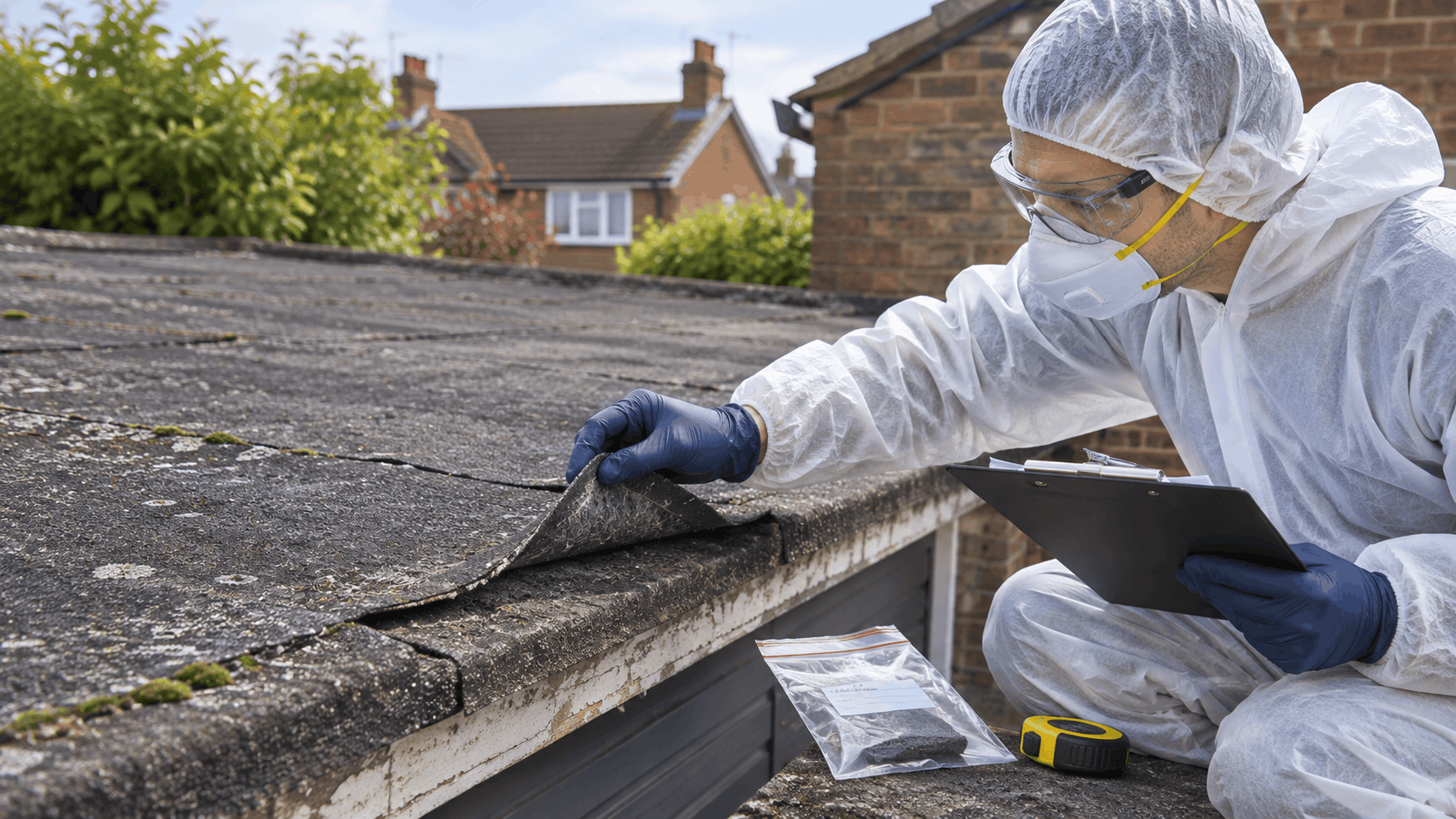
Older bitumen roofing felt is typically dark grey or black, with a flat or slightly textured surface. Some products have a granular finish, while others may appear cracked, brittle or weathered after years of exposure.
However, you cannot reliably identify asbestos roofing felt by appearance alone. Asbestos-free felt can look almost identical, and any asbestos fibres within the bitumen may not be visible.
The age of the roof may provide some clues, but professional testing is needed to confirm whether a suspected material contains asbestos.
Important: Never cut, tear, scrape or pull apart suspected asbestos roofing felt to identify it. If you’re unsure what a roof covering contains, arrange a professional assessment before disturbing the material.
Is Asbestos Roofing Felt Dangerous?
Asbestos roofing felt generally presents a lower risk when it’s intact and left undisturbed, as the asbestos fibres are bound within the bitumen.
The main concern arises when the material is disturbed during roofing work. Activities such as cutting, tearing, scraping or stripping old felt can release asbestos fibres into the air, which can cause serious asbestos-related diseases if inhaled.
However, a weathered or leaking roof doesn’t automatically mean asbestos fibres are being released. The risk depends on the material’s condition and how it’s handled, which is why suspected asbestos roofing felt should be assessed before repairs or removal begin.
What Should You Check Before Repairing or Replacing Roofing Felt?
Before repairing or replacing an older felt roof, it’s important to establish what materials are present and whether the planned work could disturb them.
Here are four things to consider:
How old is the roof covering?
Check whether you have any records of when the felt was installed or last replaced. Older bitumen-based products are more likely to warrant investigation, although age alone doesn’t confirm asbestos.
Are there multiple layers of roofing felt?
Previous repairs may have involved laying new felt over existing coverings. Even if the surface is relatively new, older asbestos-containing materials could remain underneath.
What work is being carried out?
Repairing a small leak is different from stripping an entire roof. Consider whether the work involves cutting, lifting or removing existing felt, including any underlying layers.
Has the roof been assessed for asbestos?
Check any existing asbestos survey reports to see whether they cover the roofing materials affected by the work. If the information is missing or incomplete, arrange a professional assessment before proceeding.
Remember that roofing work also presents risks from working at height and potentially fragile surfaces. Don’t climb onto a roof or lift sections of felt yourself to investigate suspected asbestos.
How Can You Confirm Whether Roofing Felt Contains Asbestos?
The only reliable way to confirm whether suspected roofing felt contains asbestos is through laboratory analysis of a representative sample.
A professional asbestos survey can help identify which roofing materials require testing. Where necessary, a suitably trained professional can collect samples for analysis by a UKAS-accredited laboratory.
If the roof has several layers, each relevant material may need to be considered separately. A negative result from the visible felt doesn’t automatically mean older coverings or other underlying materials are asbestos-free.
For more extensive roofing refurbishment, an appropriately scoped refurbishment and demolition survey may be needed to identify asbestos-containing materials that could be disturbed during the work.
Does Asbestos Roofing Felt Need to Be Removed?
Not necessarily. If asbestos-containing roofing felt is in good condition and unlikely to be disturbed, it may be appropriate to leave it in place.
In some cases, a new roof covering can also be installed over existing asbestos-containing felt, avoiding the need for removal. However, this depends on the condition of the roof, the suitability of the existing materials and whether the work can be completed without disturbing the asbestos.
If the felt is retained or covered over, its location should be recorded so anyone carrying out future roofing work knows it’s present.
Where the existing covering is badly deteriorated or needs stripping as part of a roof replacement, removal may be the more appropriate option.
How Is Asbestos Roofing Felt Removed and Disposed Of?
If asbestos roofing felt needs removing, a competent contractor should assess the materials involved and plan how the work can be carried out while minimising fibre release.
This includes arranging safe access to the roof, controlling the work area and taking appropriate precautions when handling the felt. The removed material must then be properly contained and disposed of as asbestos waste at an authorised facility.
Not all asbestos roofing felt removal requires an HSE-licensed contractor, but the work still requires an appropriate risk assessment, training and precautions.
The Health and Safety Executive provides specific guidance on removing asbestos-containing bituminous products, including roofing felt.
If asbestos-containing roofing felt needs removing, a competent contractor can advise on the necessary precautions and arrange safe asbestos removal and disposal before replacement roofing materials are installed.
Concerned About Asbestos Roofing Felt?
If you’re planning repairs or replacement work on an older felt roof, Malrod can help you establish whether asbestos is present and what needs to happen next.
We provide professional asbestos surveys and removal services, including domestic asbestos removal for homes and outbuildings, and commercial asbestos removal for larger roofing projects.
To discuss your requirements, call 01942 811591 or complete our contact form and a member of our team will be in touch.
Asbestos Roofing Felt FAQs
Can a Leaking Roof With Asbestos Felt Be Repaired?
Potentially. A leaking roof doesn’t automatically mean asbestos-containing felt needs to be removed.
Whether repairs are possible depends on the condition of the existing covering and the work required. Some repairs may be possible without disturbing the asbestos-containing material, while others could involve cutting or removing sections of felt.
Have the roof assessed before arranging repairs so the appropriate approach can be determined.
What Should You Do If Suspected Asbestos Roofing Felt Has Been Damaged?
If roofing felt that may contain asbestos has been torn or damaged, avoid disturbing it further and stop any work affecting the material.
Don’t attempt to scrape away damaged sections, sweep up debris or use a domestic vacuum cleaner to clear the area.
Arrange for a competent asbestos professional to assess the material and advise whether testing, additional precautions or removal are necessary.
Should You Tell Your Roofer If the Existing Felt Contains Asbestos?
Yes. If asbestos has been identified in your roofing felt, make sure your roofing contractor knows before any work begins.
Share any relevant asbestos survey reports or testing results so they can assess how the material may affect the planned work.