

Read more
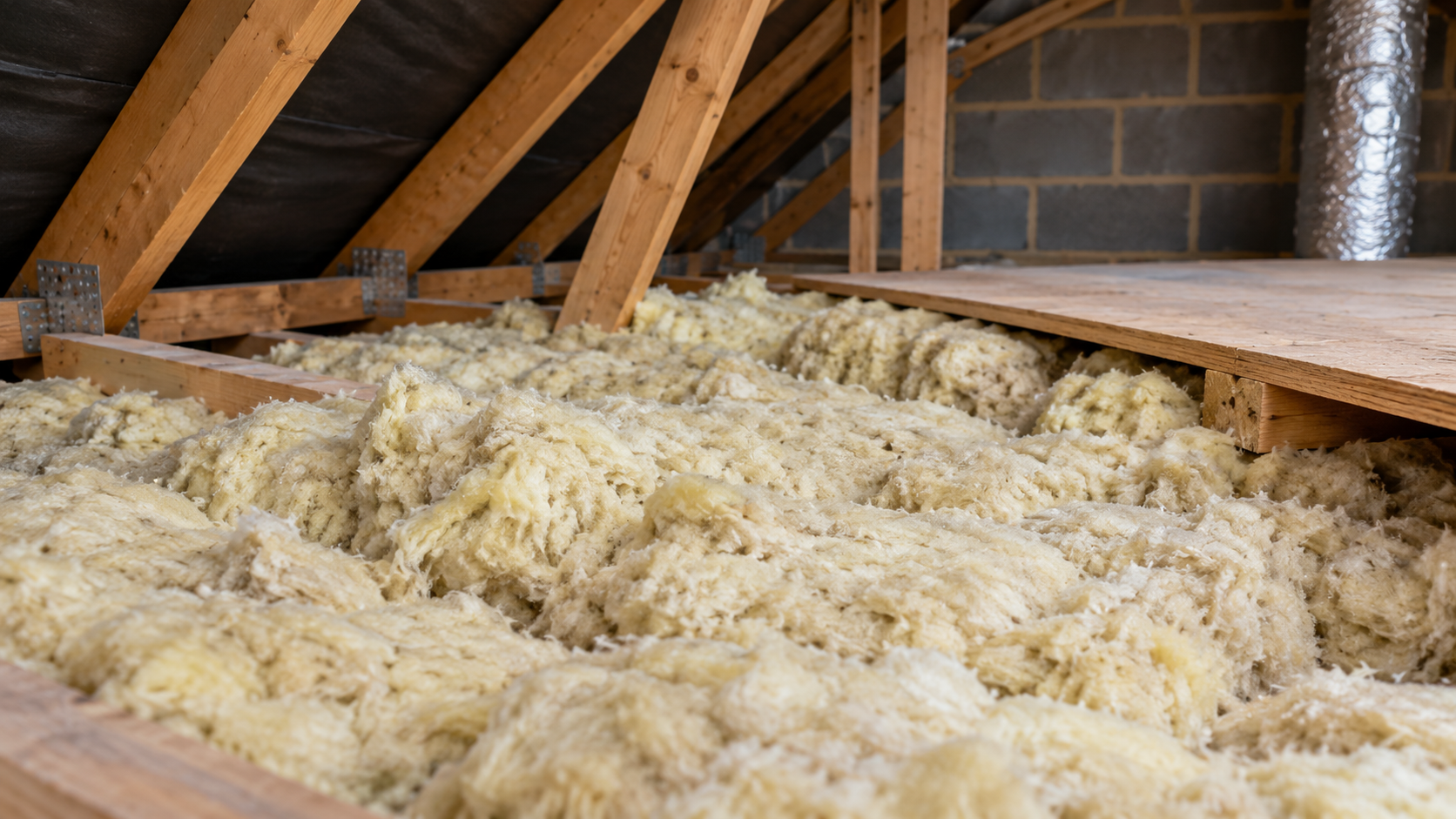
Does Loft Insulation Contain Asbestos? Risks & What to Do
October 21st, 2026
If you’ve come across some unfamiliar insulation in your loft, you might be wondering what it’s made from and whether […]
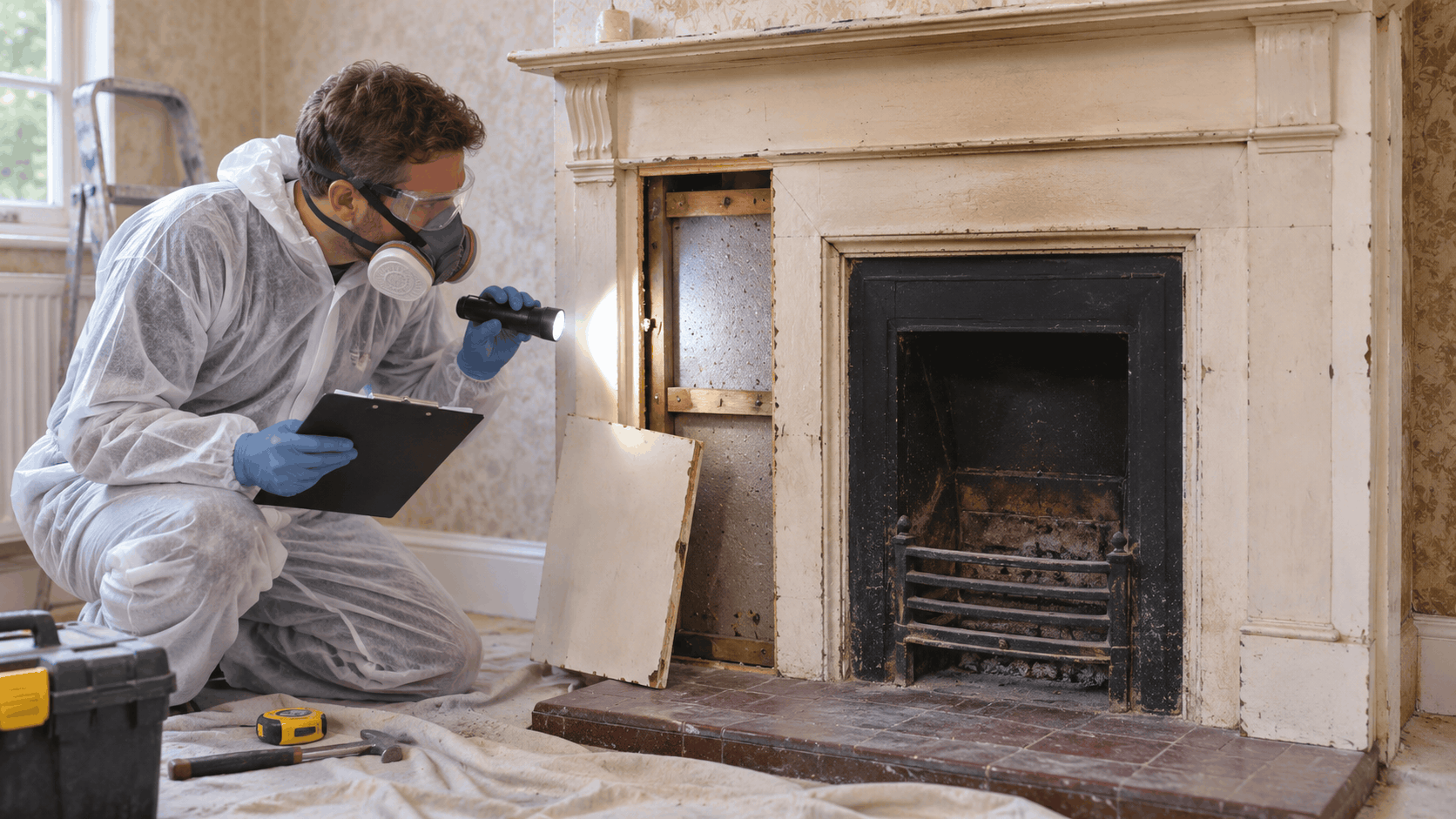
Thinking about removing or renovating an old fireplace? Depending on its age, there could be asbestos-containing materials hidden behind or around it.
Before getting started, it’s worth knowing what you might be dealing with. This guide explains where asbestos can be found around fireplaces, how to check for it and what to do if you suspect it’s present.
Yes, some older fireplaces and heating installations contain asbestos. It was historically used in certain heat-resistant and insulating materials, particularly those fitted behind or around fireplaces.
However, not every old fireplace contains asbestos, and the decorative fireplace itself may be completely asbestos-free.
Fireplaces in properties built or refurbished before 2000 are worth checking, but it’s also important to consider when the fireplace was installed or altered. An older property may have had its fireplace replaced, while newer fittings could conceal original materials.
Asbestos may be present in several components of an older fireplace installation, including materials that aren’t immediately visible.
Some older fireplaces have heat-resistant boards or panels fitted behind or around them to protect surrounding building materials.
These may include asbestos insulating board (AIB), which can look similar to ordinary plasterboard or other non-asbestos fire-resistant panels.
For more information about this material, read our guide to asbestos insulating board.
Materials such as brick, natural stone, cast iron and ceramic tiles aren’t inherently asbestos-containing.
However, some older fireplace installations may have asbestos-containing boards or protective materials fitted beneath or behind decorative surrounds and hearths.
This means removing an apparently asbestos-free surround could expose older materials that weren’t previously visible.
Asbestos was also used in certain older chimney and heating systems, including some asbestos-cement flue pipes and heat-resistant components.
Some older stoves and heating appliances also contained asbestos rope seals or gaskets designed to withstand high temperatures.
However, ordinary brick chimneys and firebricks aren’t automatically asbestos-containing. The materials used depend on the installation and any alterations made over time.
You can’t reliably identify asbestos in a fireplace just by looking at it. Some asbestos-containing boards and heat-resistant panels can look almost identical to modern asbestos-free alternatives, particularly when they’ve been painted or plastered over.
The age of the fireplace and any previous alterations may provide some clues, but neither can confirm whether asbestos is present.
Important: Never scratch, drill, break or remove suspected asbestos-containing boards or fireplace components to try to identify them. Doing so could release harmful asbestos fibres if they’re present.
Before starting a fireplace renovation, it’s worth establishing exactly what materials could be affected by the work.
Here are five things to consider:
If your renovation involves removing a gas fire, you’ll also need a Gas Safe registered engineer to disconnect it safely. Work involving structural alterations to the chimney breast may require additional professional assessment.
If you’ve identified a particular board or panel that may contain asbestos, a professional asbestos survey can help assess the material. Where necessary, a suitably trained professional can take a representative sample for analysis by a UKAS-accredited laboratory.
However, testing one component doesn’t automatically confirm that everything behind or around the fireplace is asbestos-free.
For more intrusive projects, such as opening up a chimney breast or removing concealed building materials, a refurbishment and demolition (R&D) survey is generally needed before work begins.
Unlike a standard management survey, an R&D survey involves intrusive inspections to identify asbestos-containing materials that could be disturbed during refurbishment. The survey can be limited to the areas affected by the planned work rather than covering the entire property.
If you uncover an unfamiliar board or other material while removing a fireplace, stop work until it’s been properly assessed.
In the meantime:
Discovering an unfamiliar material doesn’t automatically mean it contains asbestos or that you’ve been exposed. However, you shouldn’t resume work until the material has been identified and any necessary precautions are in place.
Not necessarily. Finding asbestos around a fireplace doesn’t automatically mean the entire fireplace needs removing.
The appropriate course of action depends on the material involved, its condition and whether it’s likely to be disturbed. Some asbestos-containing materials can be left in place and safely managed, provided they’re in good condition and unlikely to be damaged.
However, if you’re planning to remove or renovate the fireplace, any asbestos-containing materials affected by the work may need specialist treatment or removal beforehand.
If you’re renovating an older fireplace or have uncovered materials that you suspect contain asbestos, Malrod can help.
We provide professional asbestos surveys and domestic asbestos removal services, helping homeowners and property managers identify and deal with asbestos-containing materials safely.
To discuss your requirements, call 01942 811591 or complete our contact form and a member of our team will be in touch.
Cast iron itself doesn’t contain asbestos, but some older cast-iron fireplace installations may have asbestos-containing materials fitted behind or around them for heat protection.
If you’re restoring or removing a period fireplace, it’s important to consider the surrounding materials rather than assuming the entire installation is asbestos-free.
Yes. Some older fireplaces were covered or boarded up without removing all the original components, meaning asbestos-containing backing boards or other materials could still be concealed inside.
If you’re planning to reopen a fireplace, don’t break through or remove unidentified boards without establishing whether asbestos could be present.
The presence of asbestos doesn’t automatically mean a fireplace is unsafe to use. However, the risk depends on where the material is located, its condition and whether using the fireplace could disturb it.
If you suspect asbestos is present, have the affected materials professionally assessed before using the fireplace. You should also have the fireplace, chimney and any associated heating appliance checked by a suitably qualified professional to establish whether they’re safe to operate.
Read more
October 21st, 2026
If you’ve come across some unfamiliar insulation in your loft, you might be wondering what it’s made from and whether […]
Read more
October 16th, 2026
Planning to strip a wall, replace a ceiling or renovate an older property? You might be wondering whether the plaster […]
Read more
August 10th, 2026
During property transactions on buildings constructed before 2000, asbestos is a common consideration. While the presence of asbestos may not […]