

It is a common assumption that once asbestos has been removed, the job is complete.
In reality, removal is only one stage of the process. What matters just as much is verifying that the area is safe to return to.
Asbestos fibres are microscopic, and a space that looks clean to the eye must still be tested to confirm that airborne fibre levels are within regulated limits.
Air monitoring provides that verification. It offers independent, evidence‑based confirmation that the work area meets the required standards before reoccupation.
In this article, we explain what air monitoring involves, when it is required and why it plays a vital role in protecting building occupants and duty holders alike.
What Is Air Monitoring?
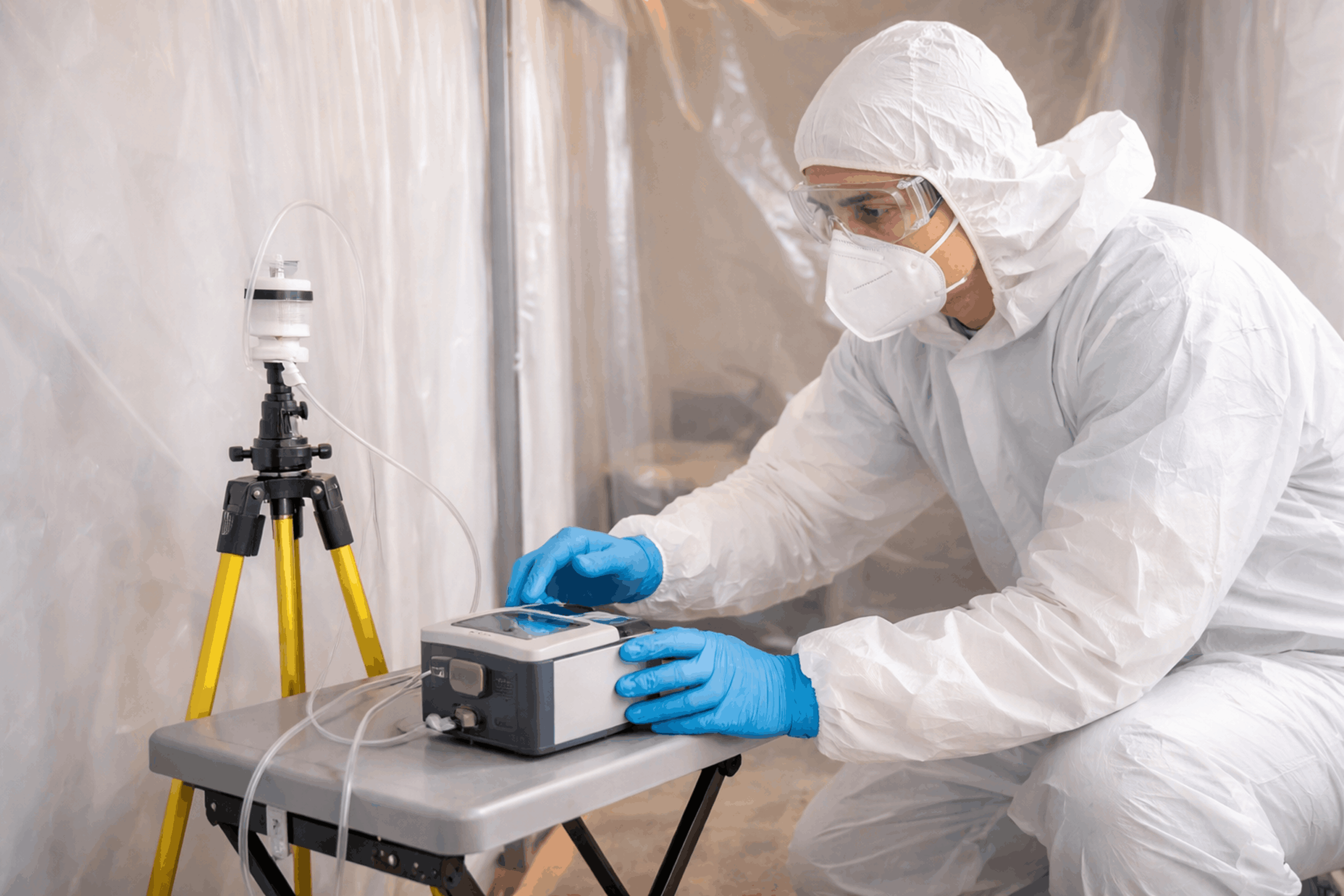
Air monitoring is the process of sampling air to measure the concentration of airborne asbestos fibres.
It involves drawing air through specialist equipment that captures microscopic particles on a filter. These samples are then analysed in a laboratory to determine the fibre levels present. Monitoring may be carried out during asbestos removal works or after the work has been completed.
Importantly, air monitoring is not a visual check. A work area may appear clean, but asbestos fibres cannot be seen with the naked eye. Testing provides evidence‑based verification that fibre levels are within regulated control limits and that the area meets the required standard.
When Is Air Monitoring Required?
The type and timing of air monitoring depends on the nature of the asbestos work being carried out.
During Licensed Asbestos Removal
Licensed asbestos removal projects require stricter control measures and monitoring procedures.
This can include:
Background monitoring to establish fibre levels before work begins.
Leak testing around enclosures to ensure control measures are effective during removal.
Reassurance monitoring outside the work area to confirm that fibres are not spreading to occupied spaces.
These checks form part of a structured approach to managing and controlling risk throughout the project.
The Four‑Stage Clearance Process
For licensed asbestos removal, a formal four‑stage clearance process must be completed before an area can be handed back for normal use.
This process includes:
- A preliminary check of the work area and documentation
- A thorough visual inspection inside the enclosure
- Air testing to confirm fibre levels are below the clearance indicator
- A final assessment after the enclosure has been dismantled
Only once all four stages have been successfully completed can a Certificate of Reoccupation be issued. Until then, the area cannot be certified as fit for reoccupation.
Non‑Licensed Work
Not all asbestos work requires licensed removal or a full four‑stage clearance process.
For certain lower‑risk, non‑licensed tasks, formal air clearance testing may not be legally required. However, in some cases reassurance monitoring may still be advisable, particularly in sensitive environments or occupied buildings.
The level of monitoring required should be proportionate to the risk and aligned with current regulations and guidance.
Why Air Monitoring Matters for Safety
Asbestos fibres are microscopic. They cannot be seen with the naked eye, and they do not leave obvious visible traces in the way dust or debris might.
This means that visual cleanliness alone does not guarantee that air quality is acceptable. A space may look clear and tidy following removal works, but only air testing can confirm that airborne fibre levels are within regulated limits.
Air monitoring provides measurable reassurance. It verifies that control measures have worked as intended and that the area meets the clearance criteria required to be declared fit for reoccupation. For building occupants, this step is a key part of ensuring exposure risks have been properly managed.
Why Air Monitoring Matters for Compliance
For commercial property owners and duty holders, air monitoring is also a matter of legal compliance.
Under the Control of Asbestos Regulations 2012, there is a duty to prevent or reduce exposure to asbestos fibres so far as is reasonably practicable. Verification through air testing forms part of demonstrating that this duty has been met.
Clearance certification and documented air test results provide formal evidence that appropriate procedures were followed. This documentation may be required for audits, inspections or internal health and safety reviews.
Beyond regulatory compliance, proper verification also protects organisations reputationally and legally. In the event of future queries or investigations, documented evidence of air monitoring demonstrates that asbestos removal was completed to the required standard.
The Role of Independent Analysts
Air monitoring and four‑stage clearance testing must be carried out by a UKAS‑accredited analytical company.
These analysts operate independently from the asbestos removal contractor. Their role is to provide impartial verification that the work area meets the necessary criteria.
This separation is important. Independent testing ensures that the results are objective and that clearance certification is based solely on measured evidence.
Using accredited analysts reinforces transparency, professionalism and confidence in the overall process.
What Happens If Air Test Results Fail?
Occasionally, air test results may exceed the clearance indicator.
If this happens, the area is not certified for reoccupation. Instead, further cleaning is carried out, followed by another detailed inspection. Additional air testing is then performed until fibre levels are confirmed to be within acceptable limits.
A failed test is not a crisis. It is part of a controlled quality assurance process designed to ensure that standards are properly met before an area is handed back for use.
This structured approach helps maintain safety, compliance and confidence at every stage of asbestos removal.
What Documentation Should You Receive?
Once asbestos removal and any required air monitoring have been completed, you should receive clear documentation confirming the outcome of the works.
This may include:
- Air test results showing measured fibre levels
- A four‑stage clearance certificate, where licensed removal has taken place
- A Certificate of Reoccupation, issued following successful clearance
- Waste consignment notes, confirming lawful transport and disposal of asbestos waste
These documents form part of your compliance record. For commercial properties in particular, they should be retained as evidence that the work was carried out in accordance with regulatory requirements. Keeping organised records supports audits, inspections and future property transactions.
Safety, Transparency and Professional Standards
Asbestos removal is only one part of responsible asbestos management. Verification through structured air monitoring provides confidence that control measures have worked and that an area meets the required standard before reoccupation.
For duty holders, documented clearance demonstrates compliance with legal obligations. For occupants, it offers reassurance that fibre levels are within regulated limits.
Malrod works alongside UKAS‑accredited analytical companies to ensure that air monitoring and clearance testing are carried out independently and professionally. From initial assessment through to certification, the focus remains on safety, transparency and regulatory compliance.
If you are planning asbestos removal or have questions about post‑removal air testing, early consultation can help you understand what will be required and how the process will be managed.
Air Monitoring FAQs
Is air monitoring always required after asbestos removal?
Not in every case. Licensed asbestos removal requires formal clearance testing. Some lower‑risk, non‑licensed work may not legally require full air monitoring, although reassurance testing may sometimes be advisable depending on the setting.
How long does air testing take?
The time required depends on the type of project and the size of the work area. For licensed removal, the four‑stage clearance process can take several hours and may extend over a full day for larger enclosures.
What is the safe limit for asbestos fibres?
In the context of clearance testing, fibre levels must be below the clearance indicator set by current regulations before a Certificate of Reoccupation can be issued. Accredited analysts measure and confirm this as part of the testing process.
Can I enter the area before clearance is complete?
No. For licensed works, the area must remain restricted until the four‑stage clearance process has been successfully completed and certification has been issued.
Who pays for air monitoring?
Air monitoring is typically included as part of the overall asbestos removal project cost. Responsibilities and arrangements should be clearly outlined in the project scope before work begins.