

Read more
Asbestos Guttering and Downpipes: What Property Owners Need to Know
October 12th, 2026
Noticed some old guttering or downpipes on your property that are starting to deteriorate or need replacing? If your building […]
One of the first questions people ask when asbestos removal is discussed is whether they’ll need to leave the building.
For homeowners, that might mean arranging alternative accommodation. For businesses, it can raise concerns about downtime, staff safety and disruption to operations. The idea of removal work taking place nearby can understandably cause uncertainty.
In reality, whether you can remain in a property during asbestos removal depends on several factors, including the type of material involved, the scale of the work and how the area is controlled.
In this article, we explain how these decisions are made and what measures are used to protect occupants during professional asbestos removal projects.
There isn’t a single answer that applies to every project.
Some asbestos removal work is small in scale and carried out in a controlled, isolated area. In these cases, it may be possible for occupants to remain in other parts of the building while the work takes place.
Other projects, particularly those involving higher‑risk materials or larger areas, require fully enclosed work zones and stricter control measures. Depending on the layout of the building, this can mean temporary relocation or restricted access for part or all of the property.
The decision is not based on convenience. It is based on risk assessment, regulatory requirements and the ability to properly segregate the work area. Where it is safe and compliant to do so, projects can often be planned to minimise disruption. Where it is not, temporary closure or relocation is the responsible course of action.
Several factors determine whether a property can remain occupied during asbestos removal.
The type of asbestos material is one of the main considerations. Higher‑risk materials, such as pipe lagging or insulation board in poor condition, typically require fully enclosed working areas and more stringent controls. Lower‑risk bonded materials, such as certain cement products, may allow for more flexibility if they can be removed in a contained way.
The scale and location of the work also plays a part. Removal from a single, self‑contained room is very different from work that affects shared corridors, ventilation systems or multiple floors. External removal, such as a garage roof, is usually easier to manage without affecting the main building.
Whether the work is licensed or non‑licensed can influence the setup. Licensed projects involve stricter control measures, including enclosures and air management systems, which may restrict access to larger areas.
Finally, the layout and occupancy of the building matters. In some properties, work areas can be safely segregated with alternative access routes maintained. In others, the design of the building makes separation impractical.
Each of these factors is considered before a decision is made about whether occupants can remain on site.
When asbestos removal is carried out, the work area is carefully controlled to prevent fibres from spreading beyond the designated zone.
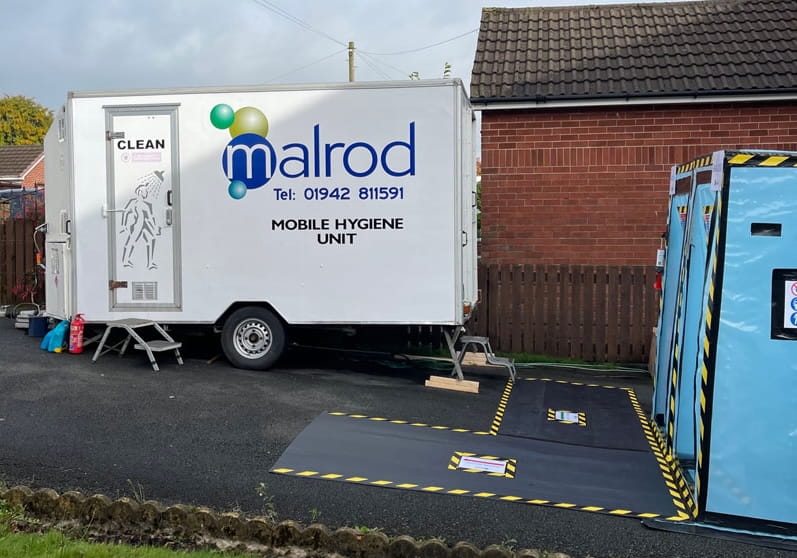
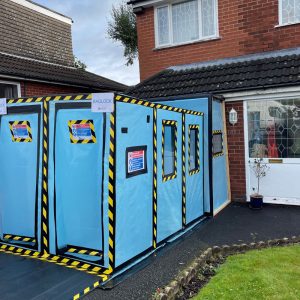
Depending on the type of project, this may involve constructing a sealed enclosure around the work area, using negative pressure units to manage airflow and restricting access to authorised personnel only. Clear signage and physical barriers are used to ensure that occupants do not enter controlled areas.
For licensed removal, operatives follow strict decontamination procedures and waste is double‑bagged, sealed and removed from site in accordance with hazardous waste regulations.
Air monitoring may also be carried out during and after the work. In higher‑risk projects, formal clearance testing is completed before the area is returned to normal use.
These measures are designed specifically to protect anyone outside the work zone. When properly implemented, they allow asbestos removal to take place in a controlled and compliant manner.
For homeowners, the concern is usually whether the family needs to move out while work is carried out.
In many smaller domestic projects, full relocation is not necessary. For example, external removal such as a garage or shed roof can often be completed without affecting the main living areas of the house.
Where removal is internal but limited to a single room, it may be possible to isolate that area while the rest of the property remains in use. Access will be restricted during the works, and you may be advised to avoid certain parts of the home until the area has been properly cleaned and, where required, tested.
However, larger or licensed removal projects may require temporary relocation, particularly if the work affects central areas of the property or involves higher‑risk materials. This would always be discussed in advance so you can plan accordingly.
The key is early assessment. Once the material and scope of work are confirmed, clear guidance can be given on whether remaining in the property is appropriate.
For businesses, the main concern is often continuity. Closing part or all of a building can affect staff, clients and ongoing operations, so careful planning is essential.
In many commercial settings, asbestos removal is carried out in phases. Work areas can be segregated so that unaffected parts of the building remain operational. In some cases, projects are scheduled outside normal working hours to reduce disruption.
Where the layout allows, separate access routes and controlled zones can make it possible for employees to continue working safely in other areas. Clear communication with staff is important so everyone understands which spaces are restricted and why.
That said, there are situations where temporary closure is the safest option. Larger licensed removal projects or works affecting shared systems, such as ventilation, may make occupation impractical during certain stages.
The decision is based on risk assessment and compliance requirements. A responsible contractor will outline the options clearly so businesses can plan around the work with minimal uncertainty.
There are circumstances where remaining in the property during asbestos removal would not be appropriate.
If the work involves extensive licensed removal across large areas, full enclosures and restricted access zones may make occupation impractical. In these cases, temporary relocation helps ensure the work can proceed safely and without unnecessary complication.
Similarly, if the layout of the building does not allow the work area to be effectively segregated, or if access routes would require passing through controlled zones, it may not be suitable for occupants to remain on site.
In commercial settings, projects affecting shared systems such as ventilation can also require temporary closure while controls are in place.
Safety and compliance take priority. Where remaining in the building would introduce avoidable risk or compromise control measures, the recommendation will always be to vacate until the area has been properly cleared and declared safe for reoccupation.
Whether a building can remain occupied during asbestos removal is decided before work begins, not on the day the team arrives on site.
The process starts with the findings of an asbestos survey, which confirm the type, condition and location of the material. From there, a risk assessment is carried out to determine the level of control required and whether the work will be licensed.
A detailed plan of work is then prepared. This sets out how the area will be contained, how waste will be handled and what steps are needed to protect anyone outside the work zone.
At Malrod, we discuss these factors openly with clients so there are no surprises. If it is safe and compliant for occupants to remain in the building, we will explain how this will be managed. If temporary relocation is the better option, that will be made clear from the outset.
The aim is always to balance safety, regulatory compliance and practical considerations, with clear guidance at every stage.
When removal is carried out by a licensed and experienced contractor, control measures are put in place to prevent fibre release outside the work area. Whether it is appropriate to remain in the building depends on the scale and type of work.
Not usually. Many garage roof removals are external and can be completed without affecting the main living areas of the property. Your contractor will confirm this after assessing the setup.
In some cases, yes. Commercial projects are often phased so unaffected areas can remain operational. However, larger or more complex works may require temporary closure.
Timescales vary depending on the material, location and size of the project. Smaller domestic jobs may be completed within a day, while larger licensed works can take longer.
For higher‑risk or licensed projects, air monitoring and formal clearance testing may be required before an area is handed back for normal use.
If asbestos removal has been identified in your property, early discussion can help you understand what to expect.
Malrod carries out licensed asbestos removal for domestic and commercial clients across Bolton and the UK. We assess each project individually and provide clear advice on whether occupation can continue during the works, along with the control measures that will be put in place.
If you’re unsure how removal may affect your home or business, our team can provide straightforward guidance so you can plan with confidence.
Read more
October 12th, 2026
Noticed some old guttering or downpipes on your property that are starting to deteriorate or need replacing? If your building […]
Read more
September 30th, 2026
Before asbestos removal begins, there needs to be a written plan for how the work will be carried out safely. […]
Read more

September 28th, 2026
Asbestos in older boilers and industrial plant wasn’t only used in pipe lagging and other forms of insulation. It was […]