

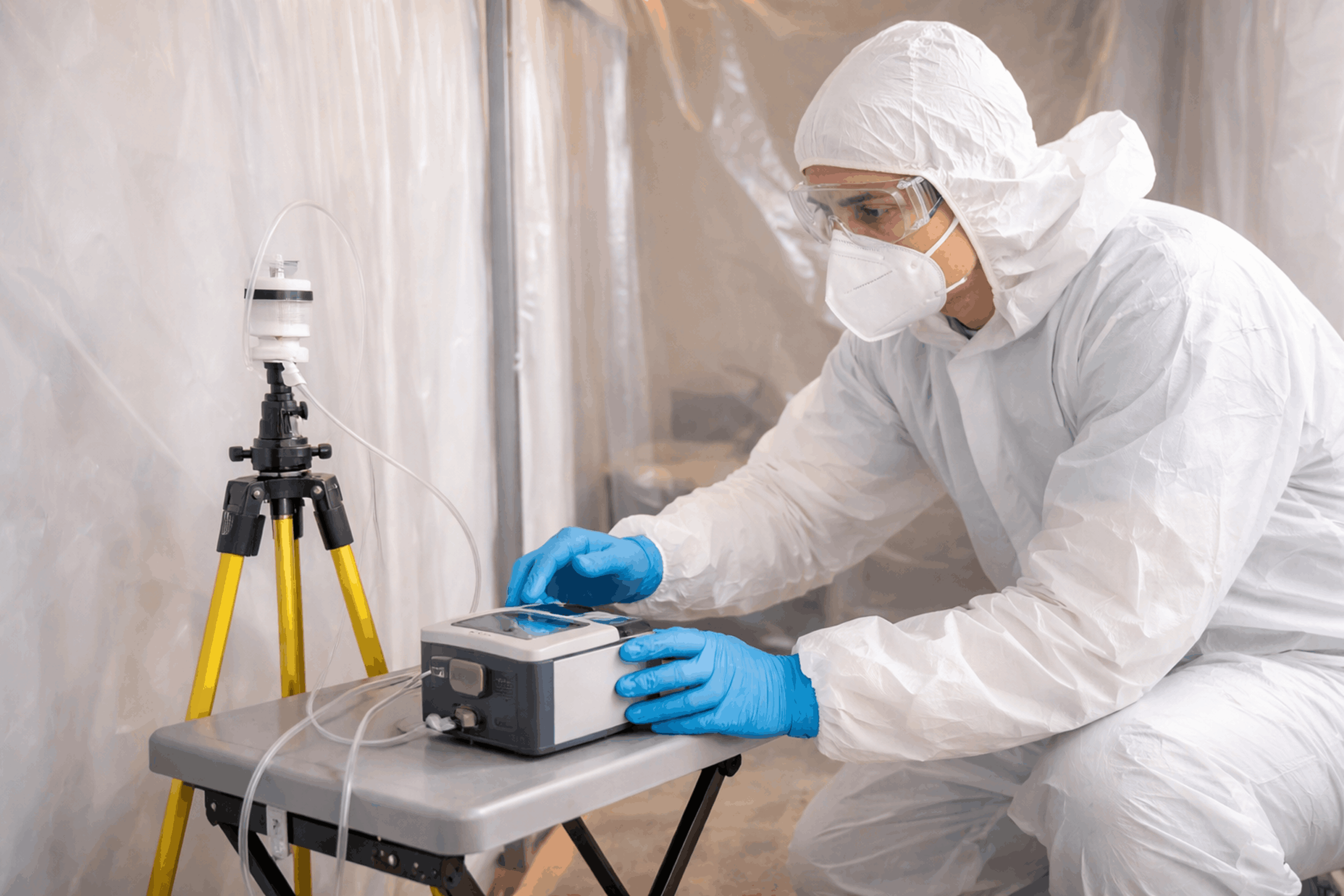
Once asbestos has been removed from a property, the process moves into its final and most important stage: verification and certification.
Post‑removal clearance is what confirms the area is safe to re‑enter and use. This stage involves inspection, testing where required, and formal documentation to demonstrate that the work has been completed to the appropriate standards.
Whether the property is a home, a renovation project, or a commercial building, understanding what happens after asbestos removal helps ensure compliance, reassurance, and peace of mind.
This guide explains the clearance process, what certification you should receive, and when it is safe to return to the affected area.
Immediate Steps After Asbestos Removal
Once the asbestos‑containing materials have been removed, the work area is not immediately handed back for normal use. A structured post‑removal process takes place to ensure the space meets required safety standards.
Careful cleaning of the work area
The removal team will carry out a thorough clean of the controlled area. This includes:
- Removing any remaining debris
- Cleaning surfaces using specialist equipment
- Ensuring no visible dust or residue remains
This stage is essential in preparing the area for formal clearance inspection.
Visual inspection
Before independent clearance testing begins, the site must be left in a condition suitable for assessment. The enclosure, equipment, and surrounding surfaces are checked to confirm that removal appears complete.
If anything further is required, this is addressed before moving to the next stage.
Preparation for clearance testing
For licensed asbestos removal, the area will remain sealed while an independent analyst conducts the formal clearance procedure. Equipment used during removal stays in place until the clearance process has been successfully completed.
Only once the site has passed the required inspection and testing stages can the enclosure be dismantled and the area prepared for reoccupation.
What Is the Asbestos Clearance Process?
For licensed asbestos removal, the area must go through a formal clearance procedure before it can be handed back for normal use. This is known as the 4‑stage clearance process.
The clearance is carried out by an independent, UKAS‑accredited analyst, not the removal contractor, to ensure impartial verification.
Stage 1: Preliminary Check of the Site Condition
The analyst confirms that:
- The removal work appears complete
- The enclosure is intact
- Equipment is functioning correctly
- The site is suitable for a detailed inspection
If the area is not ready, further cleaning or remedial work will be required before clearance can continue.
Stage 2: Thorough Visual Inspection
A detailed visual inspection is carried out inside the enclosure. The analyst checks all surfaces, ledges, joints, and difficult‑to‑reach areas to ensure no visible asbestos debris or dust remains.
This is one of the most important stages. If any residue is found, the area must be re‑cleaned before progressing.
Stage 3: Air Monitoring and Fibre Testing
Air testing is then conducted to measure airborne fibre levels inside the enclosure. Specialist sampling equipment runs for a set period, and the collected samples are analysed to confirm fibre concentrations are below the legal clearance indicator level.
Only if results meet the required standard can the process move to the final stage.
Stage 4: Final Assessment After Enclosure Dismantling
Once air testing has passed, the enclosure is carefully dismantled. A final inspection is carried out to ensure no contamination has occurred during this process.
If all four stages are successfully completed, the area can be formally certified as safe for reoccupation.
This structured clearance process provides reassurance that licensed asbestos removal has been completed properly and that the area meets strict safety standards.
What Is a Certificate of Reoccupation?
Once the 4‑stage clearance process has been successfully completed, the independent analyst issues a Certificate of Reoccupation.
This certificate confirms that:
- The removal work has passed all clearance stages
- Air testing results are within the required safety limits
- The area is safe to return to normal use
For licensed asbestos removal projects, this certificate is a formal and essential part of the process.
Why the certificate matters
The Certificate of Reoccupation provides documented proof that the affected area has been independently inspected and verified as safe.
This is particularly important for:
- Homeowners seeking reassurance
- Landlords meeting legal responsibilities
- Businesses demonstrating compliance
- Developers completing refurbishment projects
It may also be requested during property sales, insurance assessments, or regulatory inspections.
Keep it on record
The certificate should be retained alongside other asbestos documentation, such as:
- Waste consignment notes
- Survey reports
- Updated asbestos registers (where applicable)
Maintaining clear records helps protect property owners and duty holders in the long term.
When Is It Safe to Return After Asbestos Removal?
It is safe to return to the affected area only after the formal clearance process has been completed and a Certificate of Reoccupation has been issued (where licensed work applies).
Until that point, the area should remain sealed and access restricted.
For residential properties
Homeowners should wait for confirmation from their contractor that clearance has been achieved. Even if the area looks clean, re‑entering before certification is not recommended.
Once clearance is confirmed:
- Rooms can be used as normal
- Furniture can be returned
- Redecoration or reinstatement can begin
If you temporarily vacated the property, you can return once formal sign‑off has been given.
For commercial premises
In workplaces, reoccupation should only take place after documentation has been received and reviewed. This ensures compliance with health and safety obligations and provides reassurance to employees.
Where phased removal has taken place, only certified areas should be brought back into use.
Clearance certification is the point at which asbestos removal moves from a controlled work process back to normal building use.
What Documentation Should You Receive After Asbestos Removal?
Once asbestos removal and clearance have been completed, you should receive formal documentation confirming the work and its outcome.
Keeping accurate records is important for homeowners, landlords, businesses, and anyone responsible for property management.
1. Certificate of Reoccupation (for licensed work)
For licensed asbestos removal, you should receive the official Certificate of Reoccupation issued by the independent analyst. This confirms the area has passed the 4‑stage clearance process and is safe to use.
2. Air testing results
Where air monitoring has been carried out, you may receive documentation showing fibre concentration results. These confirm that levels were below the required clearance indicator at the time of testing.
3. Waste consignment notes
Asbestos waste is classified as hazardous. Licensed contractors must transport and dispose of it in accordance with strict regulations.
Waste consignment notes provide proof that:
- The material was handled correctly
- It was transported by a licensed carrier
- It was disposed of at an authorised facility
These documents should be retained for your records.
4. Updated asbestos register (if applicable)
For commercial properties and non‑domestic premises, the asbestos register may need to be updated to reflect the removal of specific materials.
This ensures future maintenance, refurbishment, or inspections are based on accurate information.
What If Further Remediation Is Required?
In most cases, asbestos removal and clearance are completed without issue. However, there are situations where additional remediation work may be identified during or after the project.
This does not necessarily mean something has gone wrong. It may simply reflect the complexity of older buildings or previously hidden materials.
Additional asbestos‑containing materials discovered
During removal, further asbestos‑containing materials (ACMs) may be uncovered behind walls, beneath flooring, or within ceiling voids. If this happens:
- Work in that area will pause
- The material will be assessed
- A revised scope of work may be agreed
This ensures all identified risks are properly managed before the area is certified.
Contamination beyond the original work zone
In rare cases, asbestos debris may be found outside the expected removal area. If identified during clearance, the area will require further cleaning before certification can be issued.
Clearance cannot be passed until the analyst is satisfied that standards have been met.
Asbestos remediation beyond removal
Some projects involve broader asbestos remediation, particularly in larger commercial or industrial settings. This may include:
- Decontamination of surrounding areas
- Removal of residual debris
- Treatment of contaminated surfaces
Remediation focuses on restoring the area to a safe condition, not just removing specific materials.
If additional work is required, your contractor should clearly explain:
- Why it is necessary
- What the revised timeline will be
- How it affects reoccupation
The priority remains the same: ensuring the property is safe, compliant, and properly documented before it returns to normal use.
Asbestos Post‑Removal FAQs
How do I know asbestos removal was completed properly?
Proper asbestos removal is confirmed through independent clearance procedures. For licensed work, this includes the 4‑stage clearance process carried out by a UKAS‑accredited analyst.
Once all stages are passed, a Certificate of Reoccupation is issued to confirm the area is safe to use.
What is a 4‑stage asbestos clearance?
The 4‑stage clearance is a formal verification process required after licensed asbestos removal. It includes:
- Preliminary site check
- Detailed visual inspection
- Air monitoring and fibre testing
- Final assessment after enclosure dismantling
Only after successfully passing all four stages can the area be certified for reoccupation.
Who issues the asbestos clearance certificate?
The Certificate of Reoccupation is issued by an independent, qualified analyst, not the removal contractor. This ensures the clearance process is impartial and meets regulatory standards.
Is air testing always required after asbestos removal?
Air testing is required for licensed asbestos removal as part of the 4‑stage clearance process. For some lower‑risk, non‑licensed work, formal air monitoring may not be mandatory, although reassurance testing can sometimes be carried out if requested.
How long after asbestos removal can I return?
You can return to the affected area once clearance has been completed and certification has been issued (for licensed work). The exact timeframe depends on the size and complexity of the project, but reoccupation should only occur after formal confirmation.
What happens if an area fails clearance?
If an area does not pass visual inspection or air testing, additional cleaning will be carried out. The relevant stage of the clearance process is then repeated until the required standard is met. Certification cannot be issued until the analyst is satisfied the area is safe.
Do I need to keep asbestos removal paperwork?
Yes. Documentation such as the Certificate of Reoccupation, air test results, and waste consignment notes should be retained. These records may be required for:
- Property sales
- Insurance matters
- Regulatory inspections
- Health and safety audits
Can asbestos come back after removal?
Once asbestos‑containing materials have been properly removed and the area has passed clearance, they will not “come back.” However, if other asbestos materials remain elsewhere in the building, they should continue to be managed in line with the asbestos management plan.