

Asbestos is not always obvious. Many materials used in buildings before 2000 look no different from modern alternatives, which means it’s rarely possible to confirm the presence of asbestos by sight alone.
Professional asbestos testing provides clear, reliable answers. In this guide, we explain what the process involves when carried out by an experienced team, and what you can expect from initial enquiry through to laboratory results and reporting.
When Is Asbestos Testing Required?
Asbestos testing is often carried out when there is uncertainty about a material within a building.
In many cases, this happens during planned refurbishment or demolition works. Contractors may uncover insulation boards, textured coatings or pipe lagging and need confirmation before proceeding.
Testing is also common:
- As part of a management or refurbishment asbestos survey
- When damage has occurred to an existing material
- During property purchases or pre‑development due diligence
- Where duty holders need to confirm compliance
In short, testing provides clarity. Rather than making assumptions, a sample is analysed properly so informed decisions can be made about management or removal.
Step 1: Initial Enquiry and Site Assessment
When a client contacts Malrod, we gather key information about the property, including its age, use and any planned works. We’ll ask where the suspected material is located, whether it has been disturbed and if contractors are due on site.
This early discussion helps determine whether standalone asbestos testing is appropriate or whether a wider asbestos survey would be more suitable.
Where necessary, we arrange a site visit to assess the material in person. At this stage, the focus is on understanding the context and ensuring the right scope of work is agreed before any sampling takes place.
Clear communication at the outset helps avoid unnecessary testing and ensures the process is proportionate to the level of risk.
Step 2: Site Visit and Material Inspection
During the site visit, a trained surveyor will inspect the material in question and assess its condition, location and accessibility.
The aim at this stage is not to disturb anything unnecessarily. The surveyor will first carry out a visual assessment to determine whether sampling is required and whether the material is likely to contain asbestos based on its age, appearance and use.
We also consider the wider environment.
- Is the area occupied?
- Is refurbishment planned?
- Has the material already been damaged?
These factors influence how sampling is approached.
Clients are informed about what will happen before any sample is taken. The process is controlled and proportionate, with steps taken to minimise disturbance and prevent fibre release.
Step 3: Controlled Sample Collection
If sampling is required, it is carried out in a controlled and methodical way.
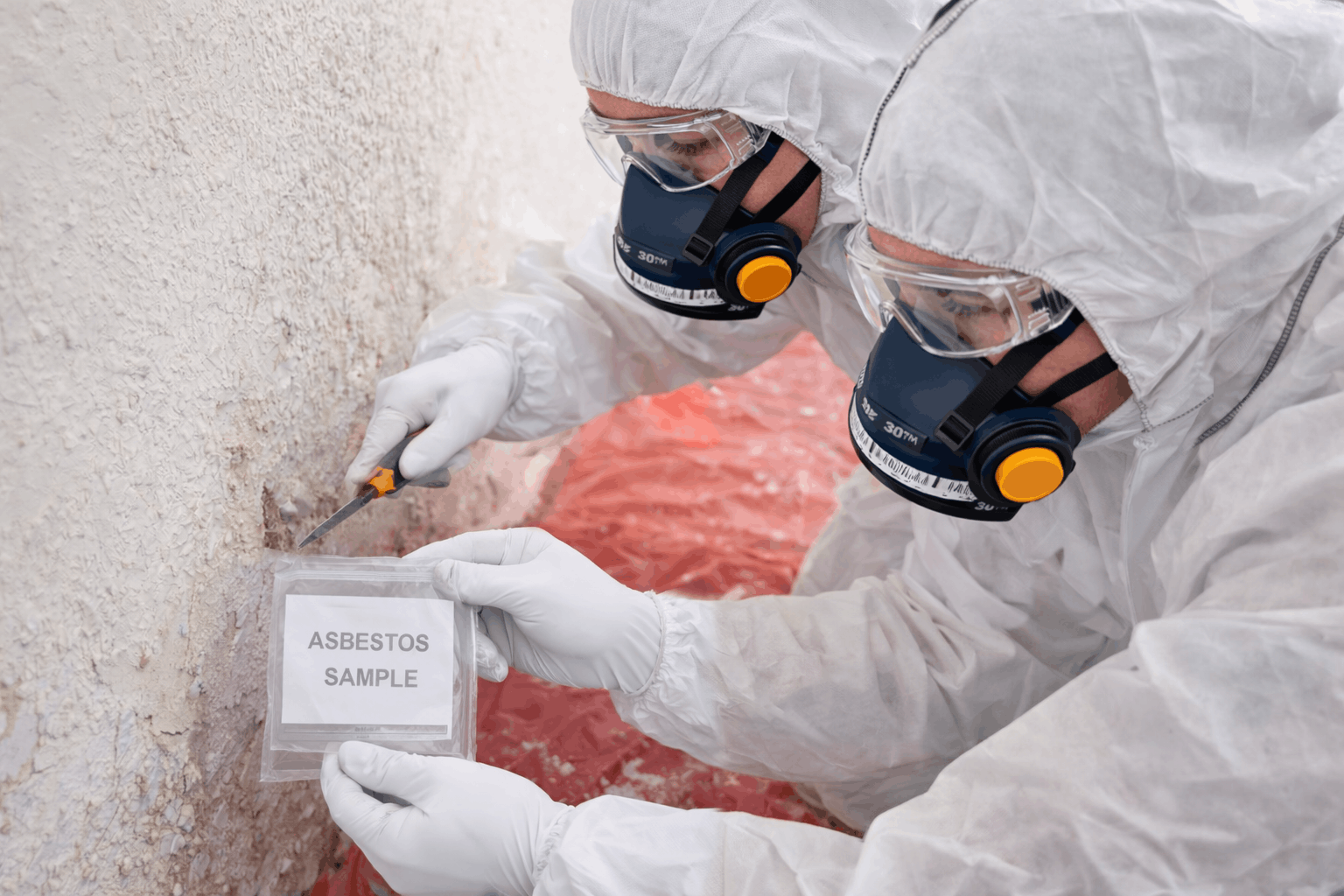
Only a small piece of the suspect material is taken for analysis. The surveyor uses appropriate personal protective equipment and follows established procedures designed to minimise the release of fibres. The immediate area is carefully managed throughout the process.
Once the sample has been taken, it is sealed in a secure container, clearly labelled and prepared for transport to the laboratory. The sampled area is then made safe, which may include sealing or encapsulating the point where the material was accessed.
While taking a sample may appear straightforward, improper handling can increase the risk of fibre release. Professional sampling ensures the material is obtained safely and that the area is left in a suitable condition.
Step 4: Laboratory Analysis
Once collected, samples are sent to a UKAS‑accredited laboratory for analysis.
Testing is typically carried out using polarised light microscopy (PLM), a method that allows analysts to identify asbestos fibres and determine the type present, if any. This distinction is important, as different asbestos types and materials can carry different risk profiles.
Results are usually returned within a short timeframe, depending on the urgency of the project. Where time‑sensitive works are involved, this can often be factored in at the outset.
Laboratory testing provides definitive confirmation. Rather than relying on assumptions, clients receive clear, evidence‑based results that can be used to guide the next steps.
Step 5: Reporting and Recommendations
Once laboratory results are received, the findings are compiled into a clear written report.
This confirms whether asbestos is present and, if so, identifies the type of asbestos detected and the material sampled. Where testing forms part of a wider survey, the report will also outline the location, extent and condition of any asbestos‑containing materials.
Just as importantly, the report explains what this means in practical terms. Not all asbestos requires immediate removal. In some cases, materials in good condition can remain in place and be managed safely. In others, particularly where refurbishment or demolition is planned, removal may be recommended before works proceed.
Our aim is to provide straightforward information so clients can make informed decisions, whether that involves ongoing management or arranging licensed asbestos removal.
What Happens If Asbestos Is Found?
Finding asbestos does not automatically mean there is immediate danger.
Risk depends on the type of material, its condition and whether it is likely to be disturbed. Asbestos that is intact and left undisturbed can often be managed safely in place.
If refurbishment or demolition works are planned, removal may be required before the project can proceed. In other situations, encapsulation or a formal management plan may be sufficient.
Where licensed removal is necessary, this will be clearly explained, along with the steps involved and any notification requirements.
The key point is that testing provides certainty. Once the material has been properly identified, the appropriate course of action can be agreed without guesswork.
Why Professional Testing Is Essential
Asbestos‑containing materials cannot be confirmed by sight alone. Many products used in buildings prior to 2000 look similar to modern, asbestos‑free alternatives. Acting on assumption can either create unnecessary alarm or allow risk to go unmanaged.
Professional testing ensures that materials are assessed properly, samples are handled safely and results are reliable.
There are also legal considerations. In commercial settings, duty holders must demonstrate that reasonable steps have been taken to identify asbestos. For homeowners planning renovation, confirming whether asbestos is present helps prevent delays once contractors are on site.
Using an experienced, accredited contractor means the process is carried out in line with current regulations, with clear documentation to support any decisions that follow.
Asbestos Testing FAQs
Can asbestos be identified without testing?
No. While experienced surveyors may suspect a material contains asbestos based on its age and appearance, laboratory analysis is required to confirm it.
How long does asbestos testing take?
Sampling itself is usually completed during a site visit. Laboratory results are typically returned within a few days, depending on the urgency of the project.
Do I need to leave the property during testing?
In most cases, no. Sampling is controlled and localised. If any additional precautions are required, this will be explained beforehand.
Is asbestos testing part of an asbestos survey?
Yes. Testing is often carried out as part of a management survey or refurbishment and demolition survey, where suspect materials are sampled and analysed.
What happens if the result is negative?
If no asbestos is detected, you will receive written confirmation. This allows works to proceed without the uncertainty that often causes delays.
Speak to Malrod About Asbestos Testing
If you’ve encountered a material you’re unsure about, or you require asbestos testing as part of planned works, early clarification can prevent disruption later on.
Malrod provides professional asbestos testing and surveying services across Bolton and the UK. Our team will assess your situation, carry out controlled sampling where required and provide clear reporting so you can move forward with confidence.