

Read more
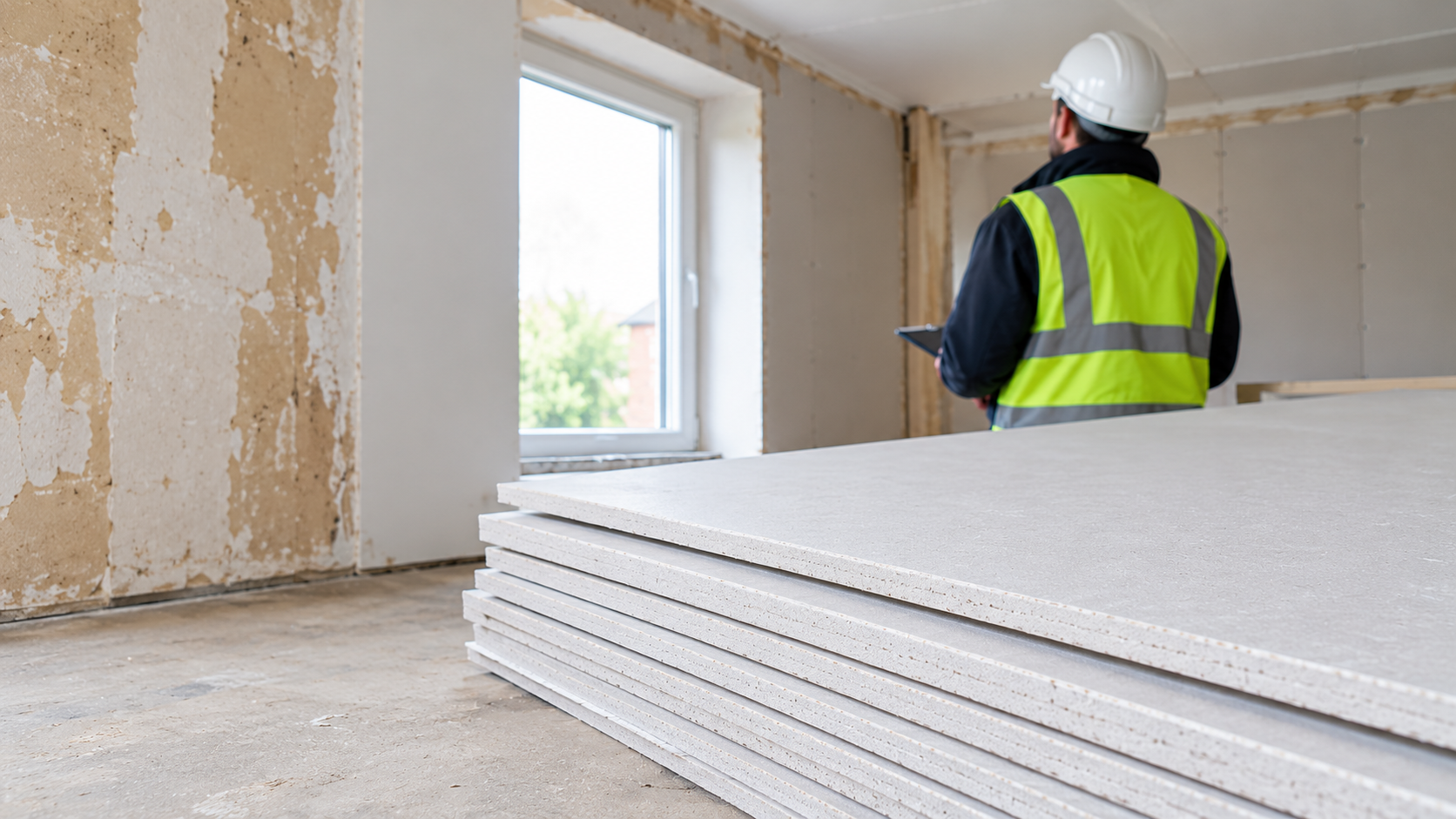
How to Identify Asbestos in Plaster and Plasterboard?
October 16th, 2026
Planning to strip a wall, replace a ceiling or renovate an older property? You might be wondering whether the plaster […]
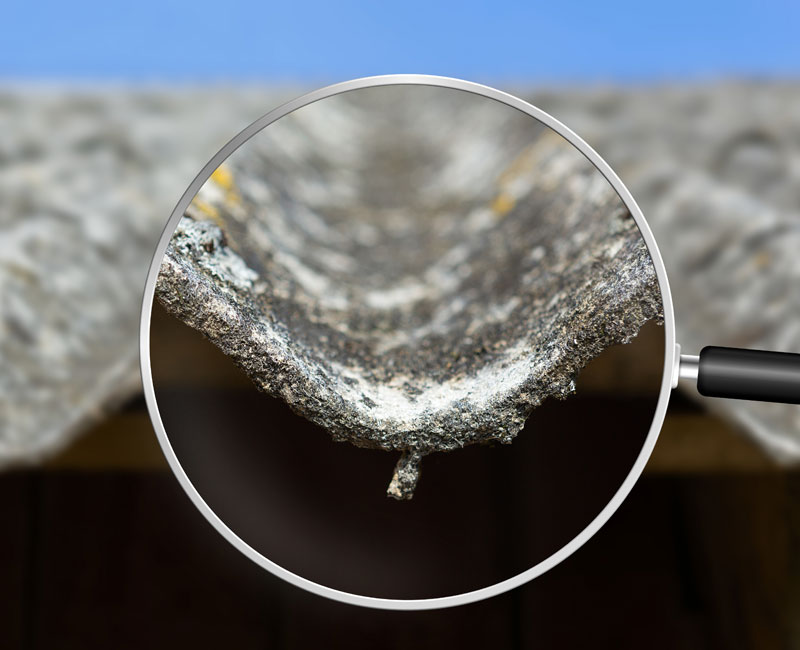
In the UK, asbestos surveys are most relevant in the following situations:
Strong risk flag (often drives the need for a survey, but not automatically a legal requirement in every case):
Situational / due diligence (commonly requested, not a universal legal requirement):
On 10 November 2025, the HSE opened a consultation (closing 9 January 2026) on potential changes to CAR 2012 and related guidance.
Proposals include raising survey standards, clarifying notifiable non-licensed work (NNLW), and strengthening independence in the four-stage clearance process following licensed asbestos removal.
This is a consultation rather than a confirmed change in law, but it signals the direction of travel for dutyholders and the asbestos sector.
If you have discovered a material you are unsure about, or you have been asked for asbestos information as part of a project or contract, it is normal to want a fast answer.
The priority is straightforward: prevent disturbance and get the right level of inspection for your situation. This guide explains the survey types, the rules that apply to domestic and non-domestic buildings, and how to decide what you need before work starts.
Not every property needs the same level of inspection. Below are some examples of common scenarios where an asbestos survey is either necessary or recommended.
The situation: You are in a transaction. A lender, surveyor or solicitor has flagged asbestos risk, or you have spotted a textured coating such as Artex.
Do you need a survey? It’s not usually a legal requirement for a private sale, but it is often a sensible due diligence step if the building is pre-2000 or works are likely after purchase.
The solution: A management survey (often commissioned as a “homebuyer asbestos survey” in domestic settings).
The situation: You plan to knock through walls, replace ceilings, lift floors, chase walls for electrics/plumbing, or do other intrusive work in a building that may contain asbestos.
Do you need a survey? In practical terms, you need reliable asbestos information before intrusive work starts. For non-domestic projects, dutyholders and employers are expected to identify asbestos before work that could disturb it.
For domestic projects, CDM 2015 applies, but domestic client duties are normally carried by the contractor or principal contractor. Either way, the project still needs asbestos risk addressed properly at the pre-construction stage.
The solution: A refurbishment/demolition survey for the areas affected by the works (this is the HSE-recognised survey type for intrusive projects).
The situation: You own, lease, manage, or maintain a shop, office, warehouse, or the common parts of a block of flats (corridors, stairwells, plant rooms).
Do you need a survey? Yes, you must manage asbestos risk under CAR 2012 Regulation 4.
In practice, dutyholders normally need a management survey (or equivalent asbestos information) to create and maintain an asbestos register and management plan. The duty can apply in the common parts of residential buildings too.
The solution: A management survey, followed by periodic re-inspections based on risk and the likelihood of disturbance (often done on a set schedule as part of the management plan).
The situation: You have damaged or exposed a material you are unsure about (for example older boards, cement sheets, floor tiles, or a textured coating).
Do you need a survey? You need to treat it as a potential asbestos risk until proven otherwise. Stop work and avoid further disturbance.
The solution: Targeted sampling and analysis by a competent person, or a management survey of the affected area if the extent is unclear. HSE guidance highlights that asbestos can appear in many common building materials and that disturbing it is what creates exposure risk.
It is vital to choose the right survey. Using an “entry-level” survey for a “high-level” project can lead to legal trouble and health risks.
| Feature | Management survey | Refurbishment / demolition (R&D) survey |
|---|---|---|
| Purpose | Manage asbestos safely during normal occupation and routine maintenance. | Find asbestos in the work area before refurbishment or demolition so it can be removed/controlled. |
| Intrusion | Low: inspection of accessible areas, sampling where needed. | High: intrusive/destructive inspection where needed (voids, behind walls/floors). |
| When used | Day-to-day use, minor maintenance, creating/updating the asbestos register. | Before structural changes, strip-out, major intrusive maintenance, or demolition. |
| Building in use? | Usually yes. | Surveyed areas usually vacated. |
| Main legal link | CAR 2012 Regulation 4 (Duty to Manage) for non-domestic premises/common parts. | CAR 2012 Regulation 5 (identify asbestos before work that could disturb it). |
If ACMs are identified and left in place, the expectation is not automatic removal. The duty is to manage the risk, which normally includes monitoring conditions and keeping the asbestos register and management plan up to date.
Re-inspections are scheduled at intervals set by risk (material type, condition, likelihood of disturbance, occupancy and maintenance patterns), rather than a fixed “annual” rule for every building.
The Control of Asbestos Regulations 2012 (CAR 2012) are the main UK regulations covering asbestos risk management, particularly in workplaces and other non-domestic premises.
If you own, manage, or have responsibility for maintenance/repair in non-domestic premises, you are likely to be the dutyholder under CAR 2012 Regulation 4.
This duty also applies to the common parts of multi-occupancy residential buildings (for example corridors, stairwells, plant rooms).
In practice, Regulation 4 requires dutyholders to take reasonable steps to:
Inform anyone who could disturb it (contractors, maintenance teams, others)
Non-compliance: breaches can lead to unlimited fines and, for serious offences, imprisonment.
Private homeowners (living in their own home): there is no general legal requirement to hold an asbestos register for your own home. However, if you are planning intrusive work, the asbestos risk still needs to be managed properly before materials are disturbed.
CDM 2015 and domestic clients: domestic projects are in scope of CDM 2015, but the client duties normally pass to the contractor (single contractor) or the principal contractor (more than one contractor), unless the homeowner agrees in writing for the principal designer to take those duties. This is why reputable tradespeople often ask for asbestos information before starting intrusive work.
Landlords: while CAR 2012 Regulation 4 is not aimed at a single private dwelling, landlords still have wider legal responsibilities to keep rented homes safe. If asbestos-containing materials are present and could be disturbed, it should be assessed and managed appropriately.
Under the Duty to Manage framework and associated guidance, materials may need to be presumed to contain asbestos where there is no strong evidence otherwise, and inaccessible areas may have to be treated as presumed until they are properly inspected.
HSE’s consultation (10 November 2025 to 9 January 2026) includes proposals to:
This is a consultation, not a confirmed change in law, but it reinforces a practical point for dutyholders: asbestos information needs to be usable, current, and actively applied, not just filed away.
Our process is designed to be thorough but efficient, ensuring you get the answers you need with minimal stress. Here is how a professional asbestos survey works in 2026:
Before we arrive, we’ll discuss the scope of your project. Are you looking for a routine check, or are you about to renovate a specific room?
We then review any existing building plans or previous reports to identify high-risk areas before we even step through the door.
A qualified Malrod surveyor will conduct a methodical walkthrough of the property.
If we find suspicious material, we take a small physical sample.
Your samples are sent to a UKAS-accredited laboratory. Here, scientists use polarised light microscopy to confirm the presence and type of asbestos (such as Chrysotile, Amosite, or Crocidolite).
Within days, you will receive a comprehensive digital report. This is a legal document that includes:
Did you know? In 2026, many property insurers require a digital copy of your Asbestos Register before they will renew a commercial policy. A Malrod survey ensures you have the documentation ready to go.
For a standard residential home in the North West, a survey typically takes between 2 and 4 hours.
Larger commercial sites or industrial warehouses can take a full day or more, depending on the complexity and the number of samples required. We always provide a time estimate during your initial consultation so you can plan your day.
We know that your project timeline depends on our report. Our samples are processed by independent, UKAS-accredited labs, and we typically deliver your full digital Asbestos Register within 3 to 5 working days.
Finding asbestos doesn’t always mean expensive removal. If the material is in good condition and unlikely to be disturbed, we may simply recommend “managing” it through regular inspections.
If it does need to be removed, Malrod is a fully licensed asbestos removal contractor, meaning we can handle the entire process from the first sample to the final waste disposal.
If you suspect asbestos is present or you’ve been told you need a survey to stay compliant, don’t leave it to chance. With 50 years of experience serving Bolton, Manchester, and the wider UK, we provide the clarity and certification you need to move forward safely.
Read more
October 16th, 2026
Planning to strip a wall, replace a ceiling or renovate an older property? You might be wondering whether the plaster […]
Read more

August 10th, 2026
During property transactions on buildings constructed before 2000, asbestos is a common consideration. While the presence of asbestos may not […]
Read more
May 18th, 2026
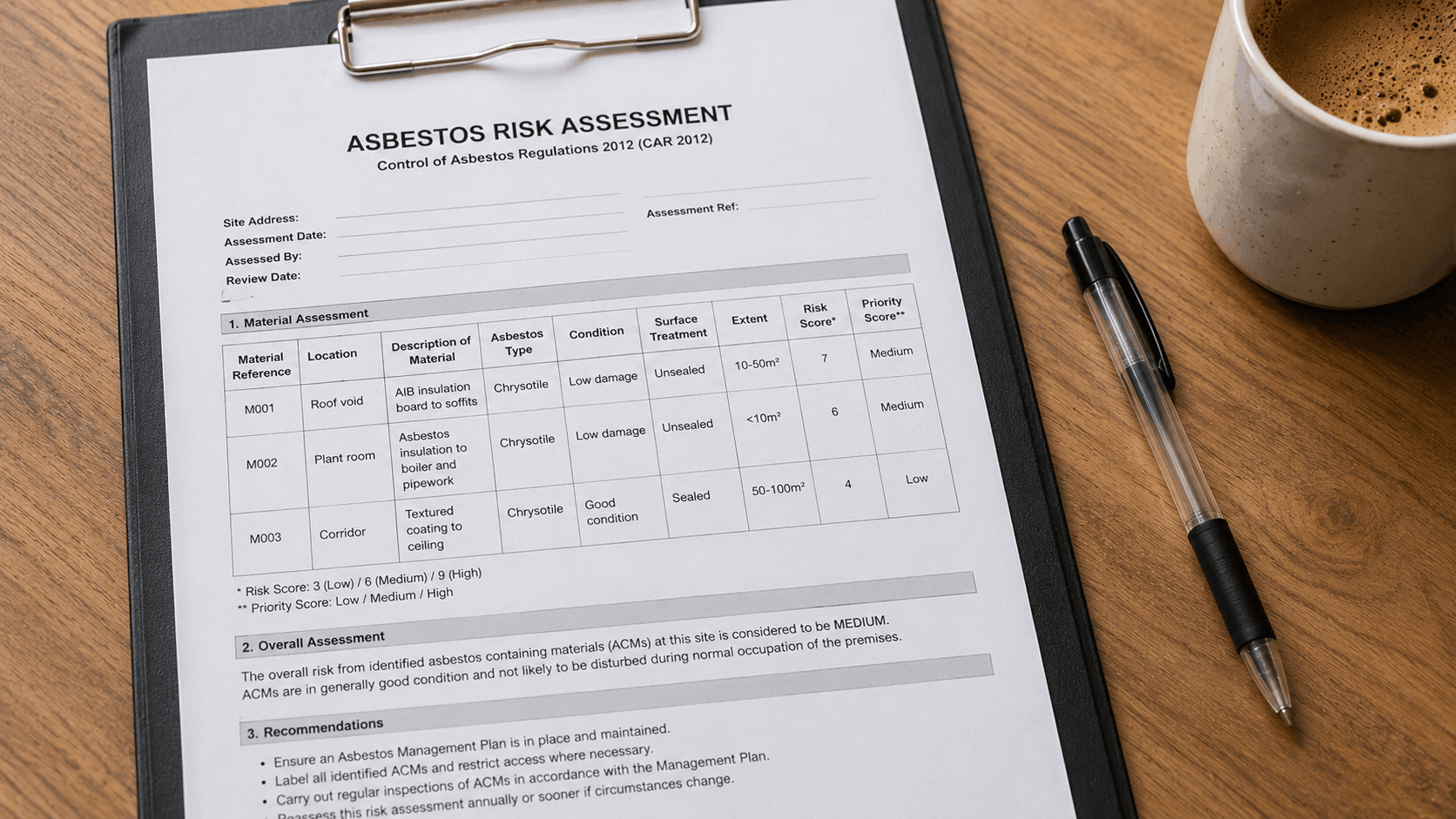
Once asbestos-containing materials (ACMs) have been identified, the next step is assessing the risk they pose and deciding what action, […]