

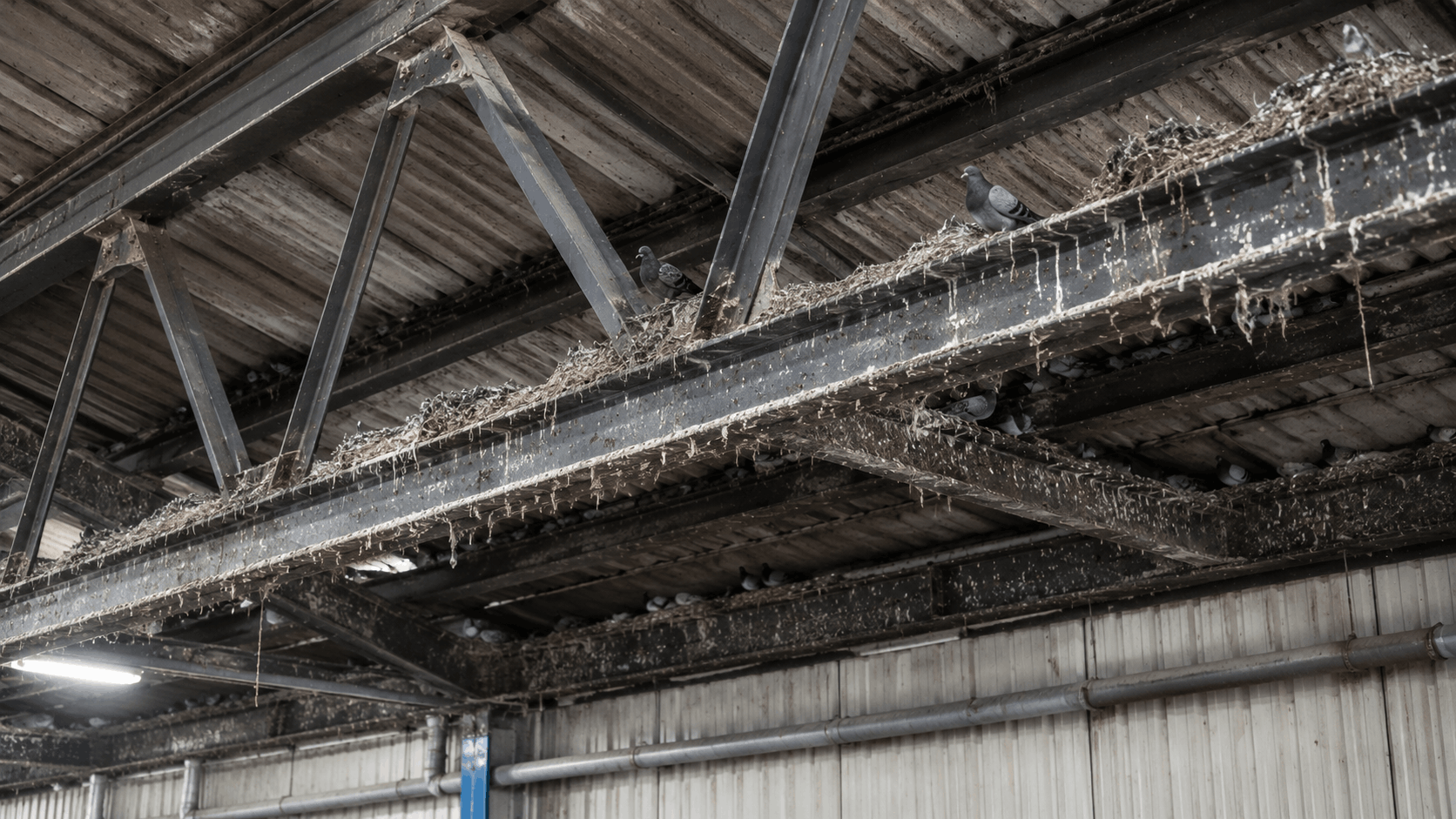
Birds roosting on commercial buildings are often dismissed as a minor nuisance. However, when left unmanaged, infestations can lead to property damage, blocked drainage systems and significant accumulations of bird guano.
Beyond the visible mess, guano can create slip hazards and hygiene concerns, particularly in workplaces, retail environments and public‑facing premises.
Taking preventative steps early can reduce disruption, protect your building and minimise health and safety risks. In this guide, we outline practical measures to help prevent bird infestations and explain when professional support may be required.
Why Birds Choose Commercial and Industrial Buildings
Commercial and industrial properties often provide ideal conditions for roosting and nesting.
High ledges, rooflines and signage offer elevated vantage points that birds naturally seek for safety. Sheltered areas such as plant rooms, loading bays, solar panels and canopies provide protection from weather and predators.
Buildings located near food outlets, waste storage areas or busy public spaces can also attract birds due to reliable food sources. Where there are no deterrent systems in place, these areas can quickly become established roosting spots.
Understanding why birds are drawn to certain structures helps property owners focus on prevention through thoughtful design, maintenance and early intervention.
The Risks of Bird Infestations
While birds may seem harmless at first, ongoing infestation can lead to a range of practical issues for commercial properties.
Structural and Property Damage
Bird guano is acidic and, over time, can damage roofing materials and external finishes. Accumulated droppings can block gutters and drainage systems, leading to water overflow and potential internal damage.
Metal fixtures, signage and plant equipment may also corrode when exposed to persistent contamination. Nesting materials lodged in roof spaces or ducting can increase fire risk, particularly if they are close to electrical installations.
Left unmanaged, what begins as minor roosting activity can develop into a more costly maintenance issue.
Health Risks Associated with Bird Guano
Accumulated bird droppings can present hygiene concerns, particularly in workplaces and public settings.
Guano can harbour bacteria and fungal spores. The risk increases when large quantities are allowed to dry and become airborne dust, especially during disturbance or cleaning. Contaminated surfaces may also pose a risk in environments where goods are stored or handled.
In addition, heavy build‑up on walkways, entrances or fire escapes can create slip hazards for staff and visitors.
The level of risk is closely linked to the extent of accumulation and the standard of site maintenance. Prompt management helps reduce both hygiene concerns and potential exposure.
Reputational and Operational Impact
Visible bird infestations can affect how a business is perceived.
Large numbers of birds roosting on a building, or significant guano build‑up around entrances, can deter customers and create negative impressions. This is particularly important for retail, hospitality and public‑facing premises where cleanliness is expected.
Ongoing issues may also disrupt staff, especially if access routes, loading areas or workspaces are affected.
For commercial property owners, bird control is not only a maintenance issue but also a matter of presentation and operational continuity.
Early Signs of a Developing Infestation
Recognising the early signs of bird activity can help prevent a minor issue from escalating.
Frequent roosting in a particular area, visible nesting materials in gutters or roof voids, and persistent droppings in the same locations are common indicators. Increased bird noise, particularly during early mornings or late afternoons, can also signal that birds are establishing themselves.
Addressing these signs promptly is usually more straightforward and cost effective than dealing with a fully established infestation.
Practical Preventative Measures
Preventing bird infestations is usually more effective and less disruptive than responding once nesting is established. A combination of physical deterrents, environmental management and routine maintenance can significantly reduce the risk.
Physical Deterrents
There are several systems designed to prevent birds from roosting on buildings.
Bird netting can be installed to block access to roof voids, canopies and other sheltered areas. Spikes and wire systems can discourage birds from settling on ledges, signage and rooflines.
For these systems to be effective, they must be properly specified and professionally installed. Poor installation can reduce effectiveness, create maintenance issues or fall short of wildlife compliance requirements. A site assessment ensures that the chosen solution suits the structure and level of activity.
Environmental Management
Reducing the factors that attract birds is equally important.
Securing waste storage areas, keeping bins closed and maintaining clean loading bays can limit reliable food sources. Regular inspection of roofs and gutters helps prevent the build‑up of nesting materials and standing water.
Addressing these issues early makes a property less appealing as a long‑term roosting site.
Routine Cleaning and Maintenance
Where droppings have begun to accumulate, prompt cleaning is essential.
Bird guano removal should not be treated as general cleaning. Large accumulations may contain harmful microorganisms, and disturbance can create airborne particles. Professional cleaning ensures that appropriate protective equipment is used and that waste is handled and disposed of correctly.
Routine inspection and controlled cleaning help prevent build‑up from reaching levels that pose hygiene or safety concerns.
Legal and Wildlife Considerations
In the UK, many bird species and their nests are protected by law.
This means that certain actions, particularly the removal of active nests, may be restricted during the breeding season. Work must be carried out in compliance with relevant wildlife legislation.
Attempting to remove nests or install deterrents without understanding these requirements can lead to legal complications. Professional advice helps ensure that any bird control measures are both effective and lawful.
When to Call a Professional Bird Control Specialist
Early intervention can prevent a minor issue from becoming a larger problem, but there are clear situations where professional support is advisable.
These include established nesting, significant accumulations of guano, concerns about hygiene or staff safety, and situations where access at height is required. Ongoing recurrence despite basic deterrents is another indicator that a more structured approach is needed.
Malrod provides safe, compliant bird control solutions tailored to commercial environments, with a focus on long‑term prevention and hygiene management.
Safe Guano Removal and Site Decontamination
Where substantial guano build‑up has occurred, removal should follow a structured and controlled approach.
This begins with a risk assessment to understand the extent of contamination and any potential exposure risks. Cleaning is carried out using appropriate methods to minimise disturbance and airborne particles, with operatives wearing suitable personal protective equipment.
Waste is collected and disposed of in accordance with relevant regulations, and affected areas may be disinfected as part of the decontamination process.
A controlled approach protects both building occupants and those carrying out the work, while restoring the affected area to a safe and hygienic condition.
Bird Control FAQs
Is bird guano dangerous?
Bird guano can pose hygiene risks when it accumulates in large quantities, particularly if it dries and becomes airborne during disturbance. It can also create slip hazards on walkways and entrances. The level of risk depends on the extent of build‑up and how it is managed.
Can I remove bird droppings myself?
Small, isolated droppings can sometimes be cleaned as part of routine maintenance. However, significant accumulations, work at height or contamination in commercial settings should be handled professionally to ensure safe removal and proper waste disposal.
Are bird spikes and netting humane?
When correctly installed, deterrent systems such as spikes and netting are designed to prevent roosting rather than harm birds. Professional installation ensures the systems are effective and compliant with wildlife legislation.
Do bird control measures require permission?
In some cases, yes. Many bird species are protected in the UK, and active nests cannot usually be removed during the breeding season. A professional assessment helps ensure compliance with wildlife laws and local regulations.
How quickly can a bird infestation develop?
Bird activity can increase gradually, but once a location is established as a reliable roosting or nesting site, populations can grow quickly. Early signs such as repeated roosting and minor guano build‑up should not be ignored.
Will bird infestations damage solar panels?
Birds often nest beneath solar panels, where shelter is available. Nesting materials and guano can reduce efficiency and cause long‑term maintenance issues if not addressed.
How often should commercial buildings be inspected?
Regular roof and gutter inspections, particularly in areas prone to roosting, can help identify early activity. The frequency will depend on the location and type of building, but routine checks form part of good preventative maintenance.